U.S. Lawmakers Challenge Trump’s Claims About Cuba After Visiting the Island
July 13, 2026
U.S. lawmakers Rep. Mark Pocan (D-WI), Rep. Teresa Leger Fernández (D-NM), and Rep. Delia Ramirez (D-IL) gave an exclusive interview to Belly of the Beast during their recent visit to Havana.
Their trip to Cuba comes as the Trump administration ramps up its oil blockade and economic war on the island, which it has justified by claiming that Cuba poses a threat to U.S. national security.
After meeting with doctors, farmers, entrepreneurs, diplomats and ordinary Cubans, the lawmakers accused Donald Trump and Marco Rubio of pushing a “false narrative.”
“We have seen no proof," said Fernández. "Congress needs to demand it.”
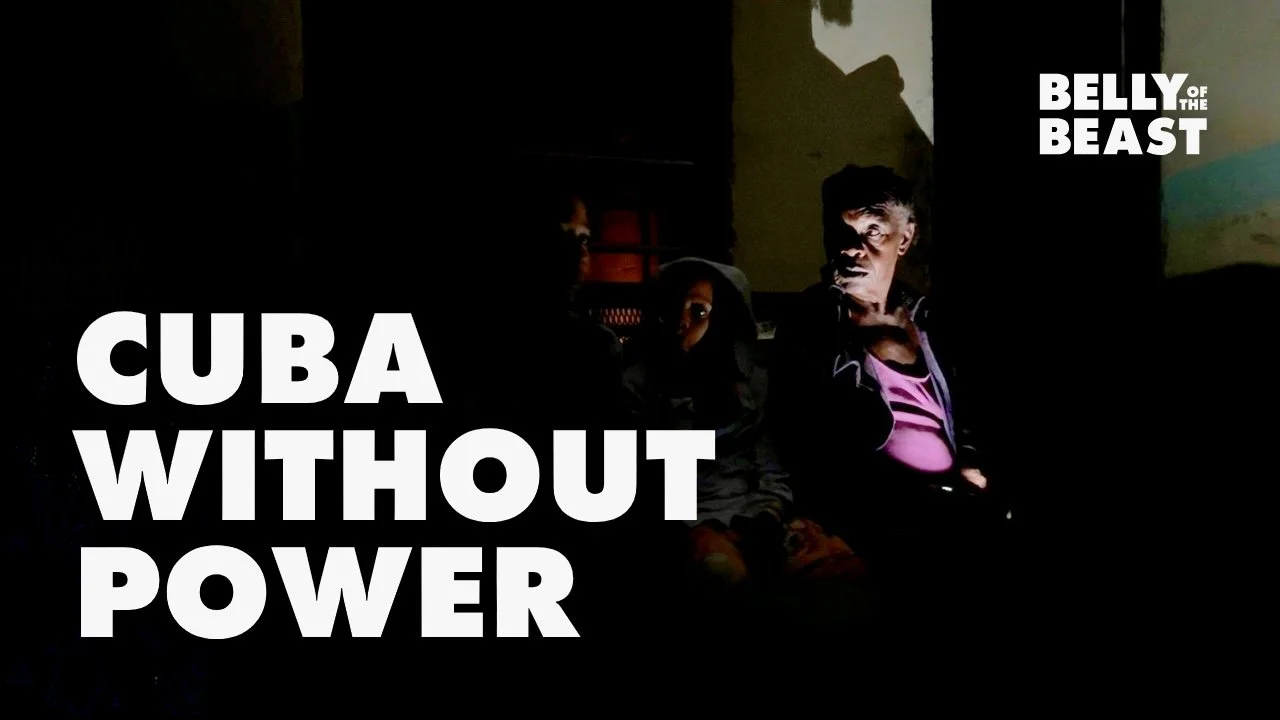
“Walking through a hospital that is dark and empty because we've cut off energy, we’ve cut off fuel,” said Leger Fernández. “Why would Americans support that?”
Related Stories
Share this Report
-
U.S. lawmakers Rep. Mark Pocan (D-WI), Rep. Teresa Leger Fernández (D-NM), and Rep. Delia Ramirez (D-IL) gave an exclusive interview to Belly of the Beast during their recent visit to Havana.
Their trip to Cuba comes as the Trump administration ramps up its oil blockade and economic war on the island, which it has justified by claiming that Cuba poses a threat to U.S. national security.
After meeting with doctors, farmers, entrepreneurs, diplomats and ordinary Cubans, the lawmakers accused Donald Trump and Marco Rubio of pushing a "false narrative."
"We have seen no proof," said Pocan. "Congress needs to demand it."
"Walking through a hospital that is dark and empty because we've cut off energy, we've cut off fuel," said Leger Fernández. "Why would Americans support that?"
"At the same way we said ceasefire for Gaza, for Palestine, we now have to say, end the blockade and we have to say it over and over and over and over," said Ramírez.
"That vision of that darkened hospital, and the descriptions of the infant mortality raising... Why would Americans support that?" Leger Fernández added.
"How important is it for a congressperson in the United States, come and see Cuba firsthand?" asked Liz Oliva Fernández, journalist of Belly of the Beast.
"We have the ability to affect the laws that could supersede, potentially, the president's actions with what he's doing with the blockade and other actions to Cuba. So having us here as the eyes and ears of the American people, we represent our constituents, but we're also able to get some of the images that people don't see from Cuba right now out by talking about it," Pocan said. "We have a platform to talk about it. And I just think at a time right now when people are so aware about human rights, especially in Gaza, you know, the awareness that didn't exist a few years. I think people just don't know about Cuba. And I think part of our job is to help lift that information."
"The sanctions that the Trump administration has put in the executive orders we heard somebody use over and over again, many people use the word siege. And to me, that was so visual that people do not know directly how bad it's gotten in Cuba because of the United States policies," Leger Fernández said. "We help shape United States policies, and we have an obligation both to our own constituents, the voters who vote for it, the communities we represent."
"Because what we are doing here in terms of the United States policies is affecting Cuba, it's affecting Mexico, it's affecting Colombia, it's affecting Belize, it's affecting Spain and Italy. We've heard from people across the globe about the negative impacts from the executive orders of Trump and the blockade that has been ongoing for decades," the congresswoman added. "It's our job to hear that so that we can go and make sure that we tell the American people and that we share with our colleagues who might have a different vision of Cuba because they haven't been here recently or they've never been here."
"Ultimately it is our policy that is impacting everyday people, and it has a real consequence back home, when you see Cuban people over the last five years who have entered the United States seeking asylum," said Ramírez.
"There are people who say, oh, there are more people coming in here. It's not our problem. Actually it is. It's not our fault that their governments this or this, actually, if our own policy, whether it's executive order of sanctions, is creating this chokehold on the people, then we do have a responsibility to understand that our own policy has real consequences on people around the world," the congresswoman continued. "And that's why I think being here is so incredibly important, because what's happening to people here on the blockade, and sanctions it's a policy choice and a policy choice that we have to talk about, that we could end by ending a blockade, by really also understanding the impact of sanctions."
"You mentioned Trump's executive orders. And one of the things that the president of the United States and the Secretary of State, Marco Rubio, use as the justification of this audience saying that you represent a national emergency that is also Cuba, called Cuba also notable and a threat to the United States. What is your impressions about Cuba represent a threat to the United States of America," Oliva Fernández asked.
"The Cuban people are a beautiful people who just want to be able to live," Ramírez said. "Many Cuban people are saying like, we want to be able to celebrate our culture, listen to our music, be able to live in community with one another, not feel the necessity of having to migrate to another country that is not our own."
"And in none of the three days that we have been here have I seen that the Cuban people are a threat to the American people. What I've seen is this real desire of being in solidarity with one another. I heard the word sisterhood or brotherhood over and over from the Cuban people themselves, that they want to see the opportunity of partnership with the United States, that they love the American people and they want to be in community with us," she said. "That's not terrorism. That's an act of community that we should embrace... What I believe is Marco. Marco wants something from the Cuban people, and he's using the Cuban people as a boogeyman."
"It actually hurts us as a nation. So, you know, I don't think there's any justification for it," Pocan said. "But leaders can lead easier if they scare people, and they use fear as a powerful tactic. And I think Donald Trump is using it like that. And Marco Rubio clearly has a predisposition to what he wants to do."
"I want to read the list because I think it's important, because when you hear about the Cuba, the United States, people hear the things that the justification said. Marco Rubio, Donald Trump use," the journalist said. "The first one is, of course, Cuba is a failed state. Cuba hosts Russian Chinese spy bases, Cuba harbor, Hamas and Hezbollah and servers around the globe. Cuba sponsored terrorism. Cuba destabilized the Western Hemisphere through migration and violence. Cuba commits human rights abuses. Cuban leaders profit while ordinary Cuban suffers, and Cuba spreading communist ideas, policies and practices."
"This is the whole thing. And my question is who is maintaining both president and the Secretary of State accountable for this?" Oliva Fernández continued. "Because I haven't seen any corporate media in the United States. Like, wait, what is the argument that you have to justify that."
"Part of the role that Congress has to play is to conduct oversight so that the president, a secretary of state, when they make claims, they actually provide the proof. And for all of that long list of claims, we have seen no proof. That's right. And I think that that's one of the things that the American people, the American media, but the American Congress needs to demand, because what we are seeing instead is that on an international basis," Leger Fernández said.
"We've met with small businesses from here. We've met with diplomats over the country who want to help out. Now, the kinds of countries that are standing there saying, we want to help the Cuban people are not the kind of countries that are going to want to help a country that's engaged in terrorism, right? They want to help Cuba because they want the hemisphere because they've received doctors from Cuba, they've received health care," she said.
"Those are the kinds of relationships that we have seen. Diplomats talk about business people talk about and and the American, the Cuban people talk about, those are not terrorist relationships. Those are business relationships. Those are humanitarian relationships. Those are the kinds of relationships that build neighbors and allies, right. And Cuba is our neighbor, and we should develop Cuba as an ally in the Western Hemisphere," the congresswoman said. "We should develop all of our Latin American countries as allies. And the only way you do that is entering into relationships with them from a place of respect. Right? And we don't have that right now, but we will be sane. When Democrats take control of Congress. We will have the power to call Marco Rubio in there and say, prove it. Show us the receipts, because we have never seen them."
"And what happened? Meanwhile," the journalist prompted.
"I think, meanwhile, you have members of Congress in key committees that are going to continue to push that. Mark now serves in the Foreign Affairs Committee. And I know that when it comes up, which. Well, because there are some of our colleagues there from Florida with Salazar, maybe at the end, who will attempt to continue to paint Cuba in a particular way with a lot of the things that you just read their mark and say, I've been there and there is no evidence," Ramírez said.
"And I think it's important to say that, yes, there are things that we must do when we're in the majority, and there are things that we will start doing literally tomorrow when we get there. But I want to just note one more thing that I think is so important. You know what I heard from a lot of the Cuban people today, from some of the civil society, from organizations here," she said.
"They've trained community organizers, they've trained on popular education, they've trained on health care systems that are innovative for of people all over the world who have come to learn these innovative strategies on how to help strengthen their own countries infrastructure in health care and community. And so I think it's important for us to know, and I think what you said was so beautiful that there's a real opportunity," the congresswoman continued.
"If we saw Cuba in Latin America as a partner for the United States to also benefit from that, we have a lot to learn about vaccines or or the latest research on diabetes medication or prevention, or the latest research on Alzheimer cures from the Cuban people. And so what would it look like if instead of calling the boogeyman, right, or calling countries that could be partners, the boogeyman, because a particular individual wants to seek profit from that, from the people, and we actually saw them as brothers and sisters where we can be building with, I think United States could actually really benefit from that partnership," she added. "And we want to talk about those possibilities."
"I'm agree with you. But historically, the U.S. policy on Cuba has been bipartisan, like there has been a policy has been maintaining and support for Republicans, but also for Democrats, except a couple of progressive Democrats like you guys. I think that the only opposition is that inside of the Congress, they have a US policy on Cuba," Oliva Fernández said. "Do you see that actually this is changing inside of the Congress in the US."
"And among American people? A few years ago, no one was saying block the bombs going to Gaza. In fact, people largely weren't aware of what was going on in Gaza. Right, because it didn't get coverage. That's not that different from Cuba. People don't really know what's going on here, but people now really care about human rights," Pocan said. "And also, the Trump administration is so overreaching with a designation of terrorism stopping fuel and medicine, which we don't even do usually in war. Those are all things that overreach will have, will not work in their advantage once the American people really know what's going on."
"The question that American people are asking now is how the the, the President Trump's actions across the globe with regards to tariffs, we were the guards to war are so unpopular right now. And the American people are understanding that those bad foreign policy decisions that he is making are negatively impacting them. And what we are doing in Cuba is also negatively impacting Americans because we are cutting off the possibility of trade," said Leger Fernández.
"We are creating a potential migratory explosion as as Cubans will be forced to leave because they can't survive here. Right. We are choking all that up and it is costing us money. Like, do we want to spend our taxpayer dollars on a blockade of Cuba? Or would we prefer to spend that on our own health care, on our own cost of living?" she said. "Right. That's and that's the question to ask because does this policy improve the lives of American citizens or not? And right now it does not. And so that's the point that we will be raising as well."
"Do you have to talk about this point with the US ambassador in Cuba?" the journalist asked.
"They wouldn't," Pocan said.
"Meet with them. They would not meet," Leger Fernández added.
"Is that normal?" Oliva Fernández asked.
"No, no. Now, when I was here on an official congressional delegation three and a half years ago, we met extensively with the US representative and others under the Trump administration. I don't think they really want people to know what's going on, because they're putting a false narrative out there. And you went through that list of the false narrative," Pocan said.
"I think let's just be very best. Be blunt. There's nothing normal about the Trump administration. He does not believe in democracy. He is attempting to implement his own policy of profit and ego and white supremacy. And so it is our responsibility as Congress," Ramírez said.
"And I think what you keep here and say to assert our as, yes, an equal branch of government, but the one that actually creates the laws and enforces them by doing oversight to ensure that he knows that he doesn't get to call the shots and create this false narrative of people, whether it's Cuba or whether it's people in Gaza or there's people in Sudan or other parts of the world," she said. "And so there's nothing normal about what he is doing, and it's not going to stop us from conducting our work of oversight."
"Is that any way in which US policy in Cuba could be justified?" the journalist asked.
"We don't do it to anyone else. And we have other countries that you could argue are actually maybe a threat to the United States or a threat to other nations, but Hugo hasn't shown any of that. So this is all a political problem with people in South Florida who maybe have come from Cuba, who want to come back, I think, and monetize what they once had," Pocan said. "And a politician, Marco Rubio, who this is his priority, who I don't think have been here. I don't think Marco Rubio has been the."
"No. Not a single time we were waiting for him," Oliva Fernández said.
"He's welcome. I'll go. I'll travel with him," Pocan said. "I'll carry his bag. You want to do something? We'll make sure he's comfortable. But he's not."
"Seen or not. Let him live through this and see the experience of his own policy," Ramírez said.
"Do you think that it is possible that more members of Congress will come to Cuba in the future? Republicans too?" the journalist asked.
"We would encourage," Leger Fernández said.
"I think that our goal is to raise awareness and," she continued. "Like we needed to change the law. So we need to go back and say we have an example that we can follow of how you can in Cuba has changed, like the 176 reforms that have been proposed that we've heard people talk about them."
"So when we say like, I like some of them, we like them, general, but we're going to push back on this. So we think we should do better. That I mean, we heard from we heard from community organizers, we heard from small businesses, we heard from farmers, we heard from so many people, like regular people in the street know about those 176 reforms," she said.
"Right? Because there's a discussion of this movement in policy in Cuba that would actually be more favorable to better business relations, not just between the United States and Cuba, but between Cuba and other Latin American countries, Spain, Italy," Leger Fernández added. "So I think that there is great opportunity. This can be fixed. Now, what's scary is how do the Cuban people survive into we can get to that point,"
"At the same way we said ceasefire for Gaza, for Palestine, we now have to say, and the blockade and and we have to say it over and over and over and over," Ramírez said. "And I think that is the responsibility that we have. Because I think Mark keeps saying this. We have to keep amplifying the realities of what has happened. And it's why it's so important that we came here. It's hard to leave our districts when we're in Congress, sometimes for 4 or 5 days debating, trying to fight what they're doing there."
"But it was important for us to physically be here because we see the connection between our work and oversight and the human rights work that we are so deeply committed to, because I think that when she talked about, you got to come back to the humanity and the babies," she added.
"There is something that you has experienced here that really taught you, that makes you think, oh my God, we need to change the U.S. policy in Cuba," Oliva Fernández asked.
"Walking through a hospital that is dark and empty because we have cut off energy, we've cut off fuel so they could not run their diagnostic machines. And then hearing about the increase in babies dying, pregnant mothers dying because of our policy that vision of that darkened hospital, and the descriptions of the infant mortality raising," Leger Fernández said.
"Just like, why would we do that? Why would Americans support that? So that's one of the visuals that will stick with me," Pocan said. "I think for me it's we're we're forcing and involuntary global blockade. It's not just the United States as blockade. But when we say international state of terror, you can't use financial systems. So no one who's trying to have a small business and trying to change Cuba in the way that supposedly Donald Trump wants, can even do it. Then you take the fact that you don't have fuel, and you have the rolling blackouts, and percent of the people left to the fact that so many people have fled to the United States because of the conditions."
"And yet we're forcing every country to have to also have a blockade, even if they don't want it. That just seems wrong in many levels and really is hurting the people of Cuba very badly," he added.
"Me, protecting the sovereignty of the United States is incredibly important. And the idea that we do not respect the sovereignty of other nations, it's so heartbreaking to me. And to see that, I think to Mark's point that the Cuban people, and to hear a young man say, look, can you tell your president either he he has his foot on my neck," Ramírez said.
"Either he ends the life or he pulls the foot off my neck. But we can't keep living this way. That that a people, 9 million people feel that they're being choked. By a policy of a country that could be a partner, that could be the country of opportunities and partnerships and, and a model of democracy and freedom and opportunity, that country that made it possible for me to be a Congress sister," she said. "That country could be choking. That young man who is brilliant engineer is a reminder that we have a responsibility to change course. And I refuse to believe that we cannot."
"And don't forget, it worked during President Obama when he opened up relations, people from the US came down here and had vacations and loved coming to Cuba. And the people of Cuba thrived, and there was no terrorism threat. Any of the things that are out there are completely false that the Trump administration is put out there. So it worked," Pocan said. "And now we went back to 65 years ago, you know, insanity of making things not work. So I just think in recent history, we have a very good example of what Cuba really is and can be. And instead, what we're doing."
Support Independent Journalism from Cuba