
From Cuba to Calabria:
Medical Missions in Times of Crisis
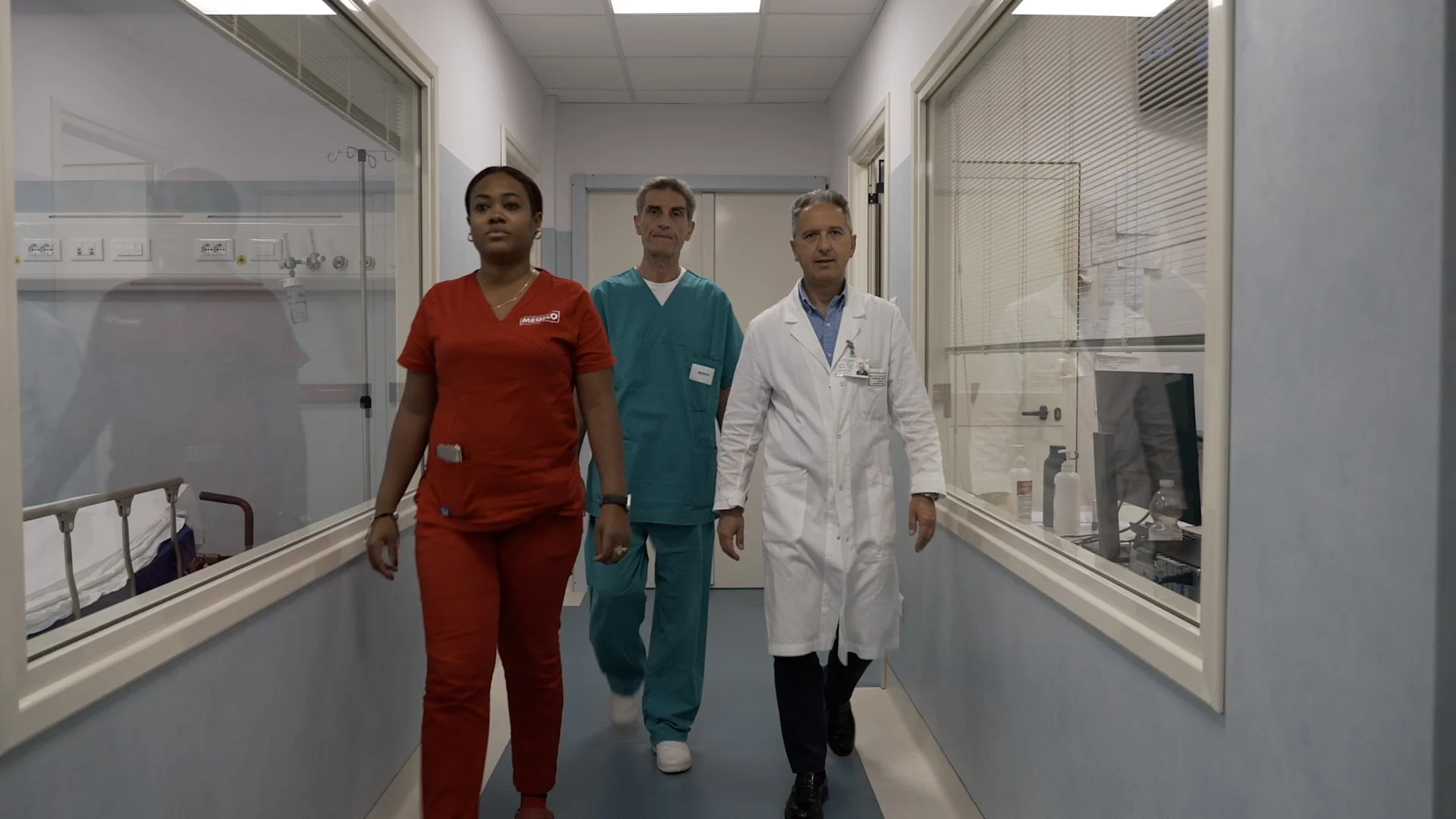
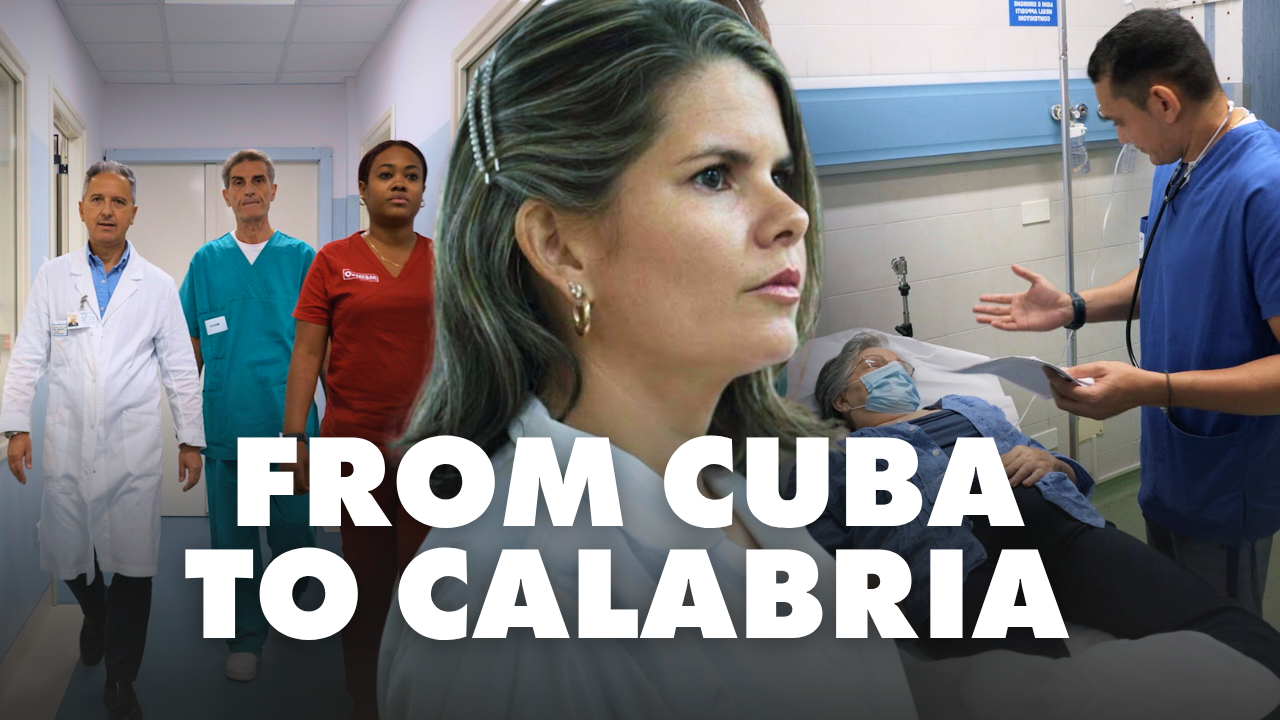
From Cuba to Calabria is a short documentary that follows a group of Cuban doctors who leave their families behind to serve a two-year medical mission in Calabria, Italy’s most impoverished region.
As Calabria’s public healthcare system buckles under staff shortages, austerity, and decades of economic neglect, Cuban physicians step into hospitals and clinics struggling to stay open, to fill the void. In a region where the ’Ndrangheta mafia has siphoned public funds, infiltrated construction and healthcare contracts, and drained resources meant for social services, entire communities have been left with fragile access to care.
The film begins in Cuba, capturing the doctors’ final days at home before their departure, and follows them as they navigate language barriers, cultural differences, and political controversy abroad. Celebrated as heroes in Cuba yet denounced by some U.S. officials as participants in “forced labor,” the mission becomes a lens into a much larger debate about international solidarity, global health inequality, and who gets to define humanitarian aid.
From Cuba to Calabria offers rare inside access to a Cuban medical mission in Europe — revealing the human stories behind a program that has become both a lifeline for underserved communities and a flashpoint in international politics.
Related Stories
-
Why Do Cuban Doctors Go Abroad?
“During our medical training, we know what we will face because we are prepared to serve on international medical missions anywhere in the world,” said one Cuban doctor preparing to leave for Italy.
“I think the most difficult part is being separated from my family,” another doctor said. “Professionally, I’m not afraid to face any situation.”
“Leaving my child behind will be difficult for me as a mother,” said another physician. “I will miss him very much.”
“We are going to do a good job in Italy,” another doctor added.
A Mission Under Attack
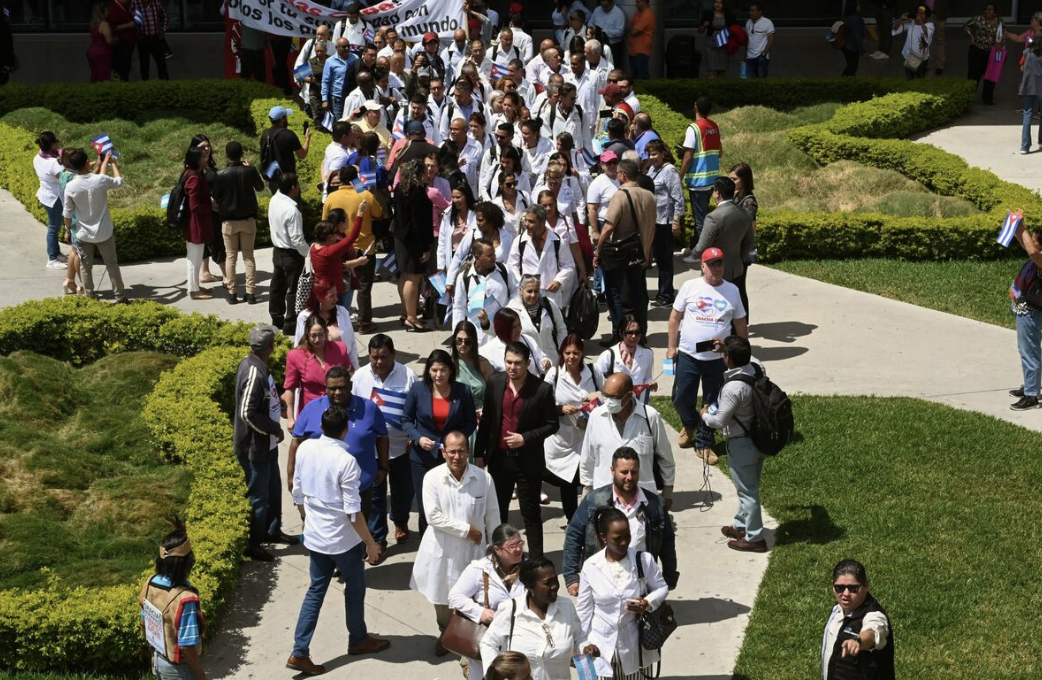
As Cuba’s medical missions came under growing criticism from U.S. officials, supporters defended the program’s long history.
“Cuban doctors have written a dignified, heroic and internationalist chapter in history,” one speaker said.
U.S. officials, meanwhile, accused Cuba of exploiting its medical workers and described the missions as a form of modern slavery.
Arriving in Calabria
“The work is intense,” one doctor said after arriving in Calabria. “Sometimes it overwhelms me, but I have to stay focused because a patient’s life depends on it.”
“This is my first time outside Cuba,” another physician said.
“Our arrival in Italy was highly publicized and controversial,” another doctor recalled.
Some residents initially questioned the decision to bring doctors from abroad, while others worried about language and cultural barriers.
Saving Lives in Italy
“My job is to do my work and do it well,” one Cuban cardiologist said.
The doctor explained that his presence helped hospitals maintain critical cardiac services and emergency care that might otherwise have been unavailable.
An Italian patient recalled how a Cuban doctor diagnosed a serious heart condition that required immediate treatment.
“The Cuban doctors have changed many things,” another resident said.
Calabria’s Healthcare Crisis
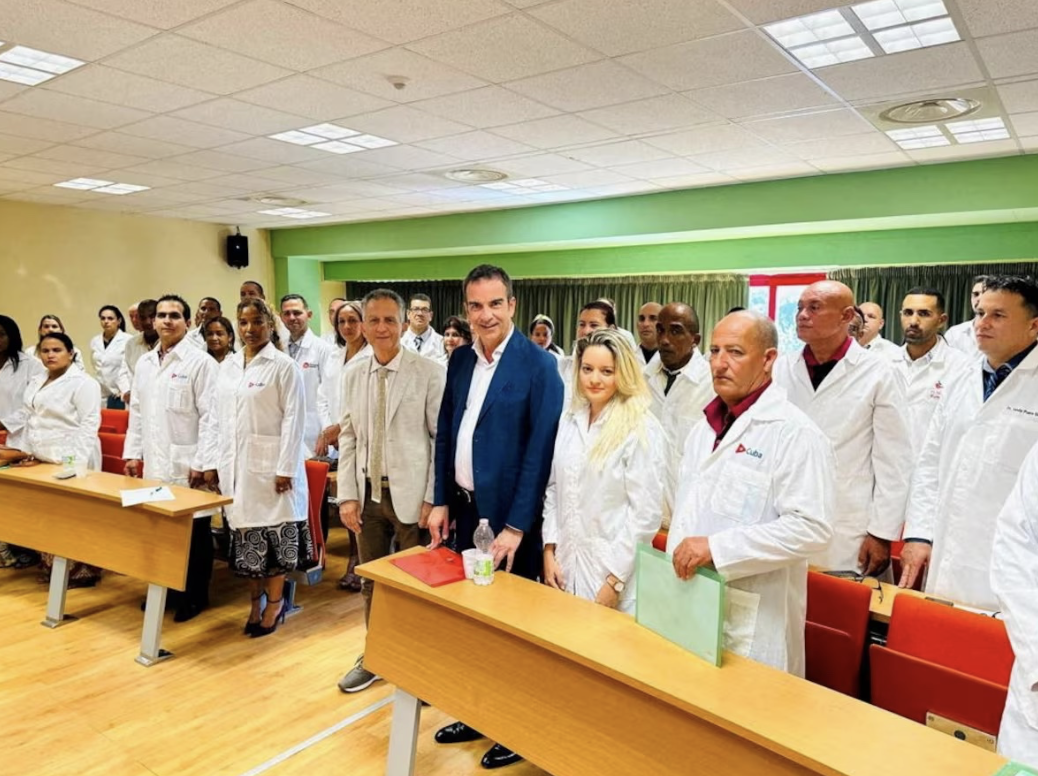
Calabria Governor Roberto Occhiuto said Cuban doctors helped the region maintain essential healthcare services during a severe staffing shortage.
“If we had not been able to bring these doctors, some hospitals would have been forced to close services,” local officials said.
Hospital administrators described how many recruitment efforts failed because doctors were unwilling to work in the region.
How Cuban Doctors Helped During COVID-19
Italian officials praised Cuban medical brigades for assisting the country during the COVID-19 emergency.
“These doctors are highly specialized and had already fought epidemics such as Ebola,” one official said.
The emergency deployment provided support that local hospitals otherwise could not have secured.
Life Far From Home
“Our colleagues told us that the people here are warm, welcoming and appreciative of Cuban doctors,” one physician said.
“The fact that my wife is here with me is a huge advantage,” another doctor said. “We support each other in everything.”
Many doctors spoke about the emotional challenge of being separated from children and relatives back home.
Human Trafficking or Medical Solidarity?
“No one forces you to come to Italy,” one Cuban doctor said. “I signed a contract.”
“We are not slaves and no one forced us to come here,” another physician added.
Many doctors acknowledged that the missions provide an opportunity to support family members in Cuba while continuing to practice medicine abroad.
“There is solidarity,” one doctor said. “But anyone who tells you it is only about solidarity is not telling the whole truth.”
Calabria Feels Like Cuba
“Locri reminds me a lot of Cuba, especially the beach,” one doctor said.
“The people in southern Italy are similar to Cubans in many ways,” another physician explained. “Their humility, their warmth and their willingness to talk remind us of home.”
Doctors also described treating migrants arriving by sea under extremely difficult conditions.
“As foreigners ourselves, we always try to put ourselves in their place,” one physician said.
Cuba’s Economic Crisis
“The biggest problem in our country is economic,” one doctor said.
“It is heartbreaking to arrive at a hospital and know that we do not have the resources needed to treat patients.”
Doctors described shortages of medicines, medical equipment and supplies, as well as the growing number of Cubans emigrating in search of opportunities.
What Italians Think of Cuban Doctors
Residents cited healthcare cuts, staff shortages and long waiting times as major challenges facing Calabria’s healthcare system.
“I had already heard about Cuba’s medical schools,” one Italian resident said. “I knew they were highly qualified.”
“I never expected Italians to welcome us so warmly,” one Cuban doctor said. “The gratitude patients show us means everything.”
The Families They Left Behind
Sometimes the hardest part of the mission is being separated from loved ones.
“I hope our son always understands that we are doctors and that we are trying to do something good for humanity,” one physician said.
“When he grows up, he says he wants to be a doctor too.”
“Even though our bodies are separated, our hearts remain together,” another doctor said.