Trump and NYT Say There’s a Russian Spy Base in Cuba. Turns Out, It’s a School
July 30, 2026
By Reed Lindsay
This story was written in collaboration with Drop Site News.
Since U.S. President Donald Trump imposed an executive order in January threatening tariffs on any country that ships fuel to Cuba, major media outlets have descended on the island to report on the resulting prolonged blackouts, collapsing hospitals and piles of uncollected trash.
Far less attention has been paid to the rationale the administration offered for imposing the blockade in the first place.
The executive order states that Cuba represents a “national emergency” and poses an “unusual and extraordinary threat” to the United States, stringing together a kitchen-sink list of familiar allegations, including accusations that Cuba sponsors terrorism and aligns itself with “dangerous adversaries” of the United States, such as Iran, Hamas, Russia and China.
More specifically, the order claims that “Cuba hosts Russia’s largest overseas signals intelligence facility, which tries to steal sensitive national security information of the United States.”
For two months, the allegation that Cuba was hosting a major Russian spy base was largely ignored by U.S. media outlets. Then, on March 24, The New York Times published an article by Michael Crowley claiming not only that the Russian spy base exists, but that it “bristles with antennas and other eavesdropping equipment” capable of spying on the U.S. Central Command, the satellite launchpads of Cape Canaveral and Trump’s Mar-a-Lago residence.
Crowley pinpointed the location: a former Soviet base on the outskirts of Havana called Lourdes that was “temporarily shut” by Vladimir Putin in 2001 but was reopened in 2014, according to The Times.
There is just one problem with this story: the base isn’t there.
The State Department did not respond to a request for comment. Belly of the Beast also sent requests to The New York Times and to Michael Crowley but received no response.
Today, Lourdes (also known as Torrens) is home to Cuba’s University of Computer Sciences (UCI). Belly of the Beast reporters spent the better part of two days walking the campus, searching the grounds and speaking with students, faculty and workers. We found no evidence of an active Russian intelligence base, much less the sort of extensive equipment described by The Times.
“Do I look like a Russian spy?” laughed Malcolm Jarrozai, a 40-year-old art professor who has been teaching at UCI and living at a residence on campus since 2006. “It’s truly laughable that these kinds of claims are being made and that major outlets like The New York Times give them a platform and allow them to be used to justify policies against Cuba.”
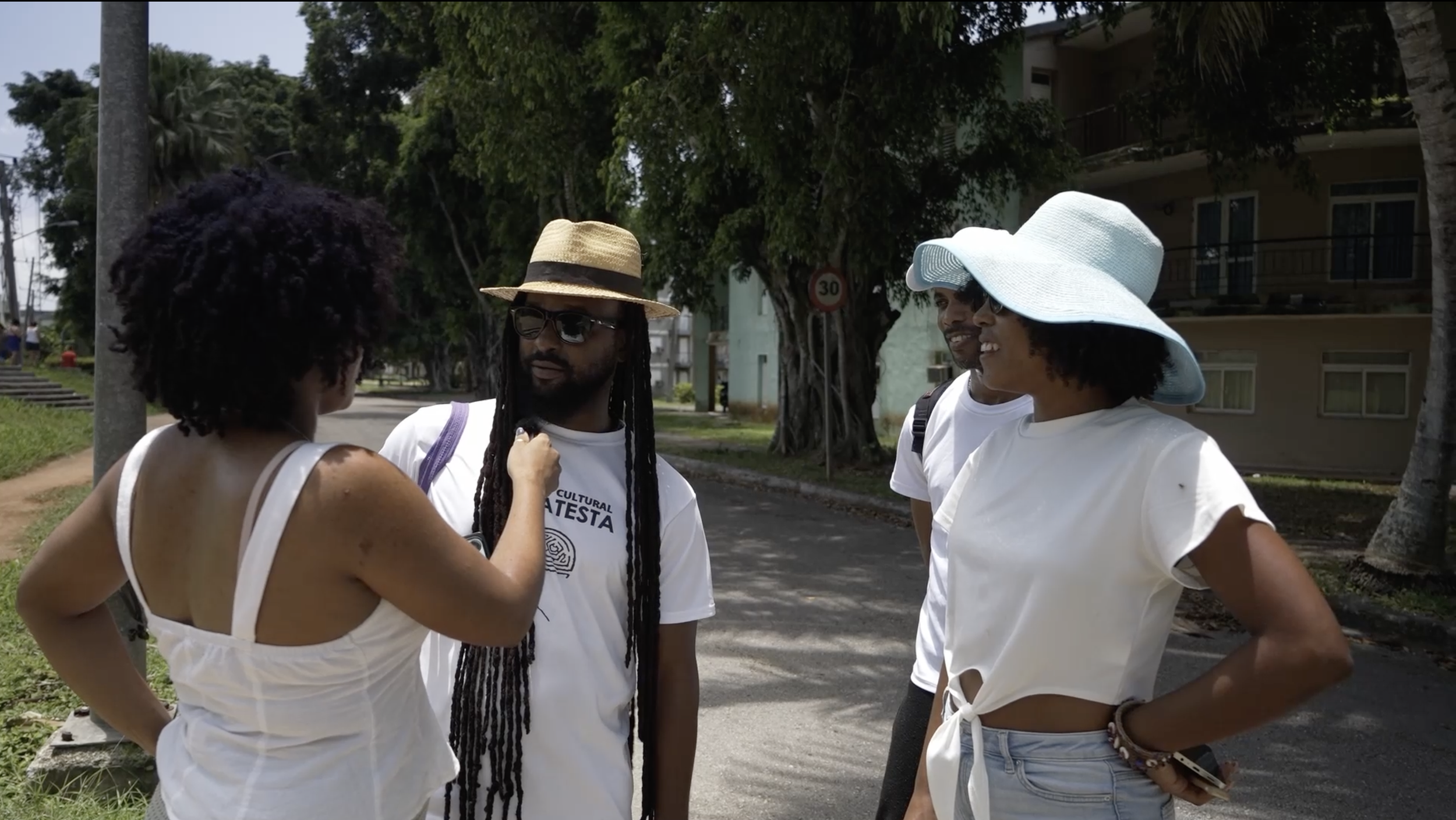
Malcolm Jarrozai, an art professor at the University of Computer Sciences, speaks with Belly of the Beast journalist Liz Oliva Fernández.
PHOTO: Alfredo Lazcano Valera
The Rise and Fall of Lourdes
Construction of a Soviet signals intelligence (SIGINT) facility in Cuba began as early as 1962, even before the Cuban Missile Crisis. By the 1980s, U.S. intelligence said Lourdes was “the USSR’s largest and most valuable base outside the Soviet Union for intelligence collection against the United States.”
In a 1983 televised address, President Ronald Reagan cited Lourdes as evidence of the Soviet threat to argue against proposed congressional budget cuts to defense spending. Reagan said the 28-square-mile base was manned by 1,500 Soviet technicians and had grown by 60 percent in the previous decade. Two years later, the Departments of State and Defense estimated there were as many as 14,700 Soviet personnel in Cuba, including 2,100 at Lourdes.
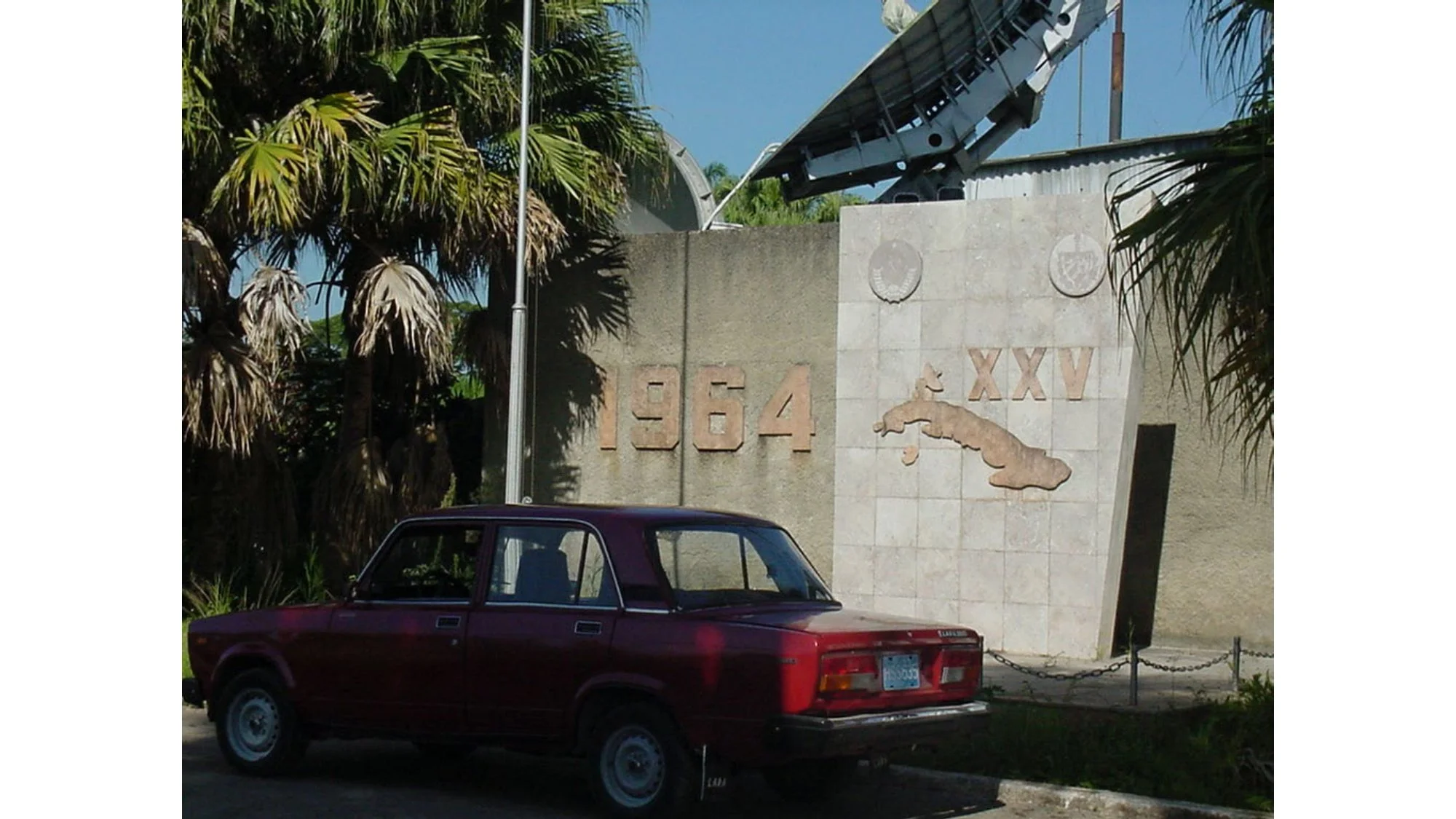
A photo of the wall of the Russian base known as Lourdes with satellite dishes in the background, before the base was dismantled.
PHOTO CREDIT: Rafael Torralbas
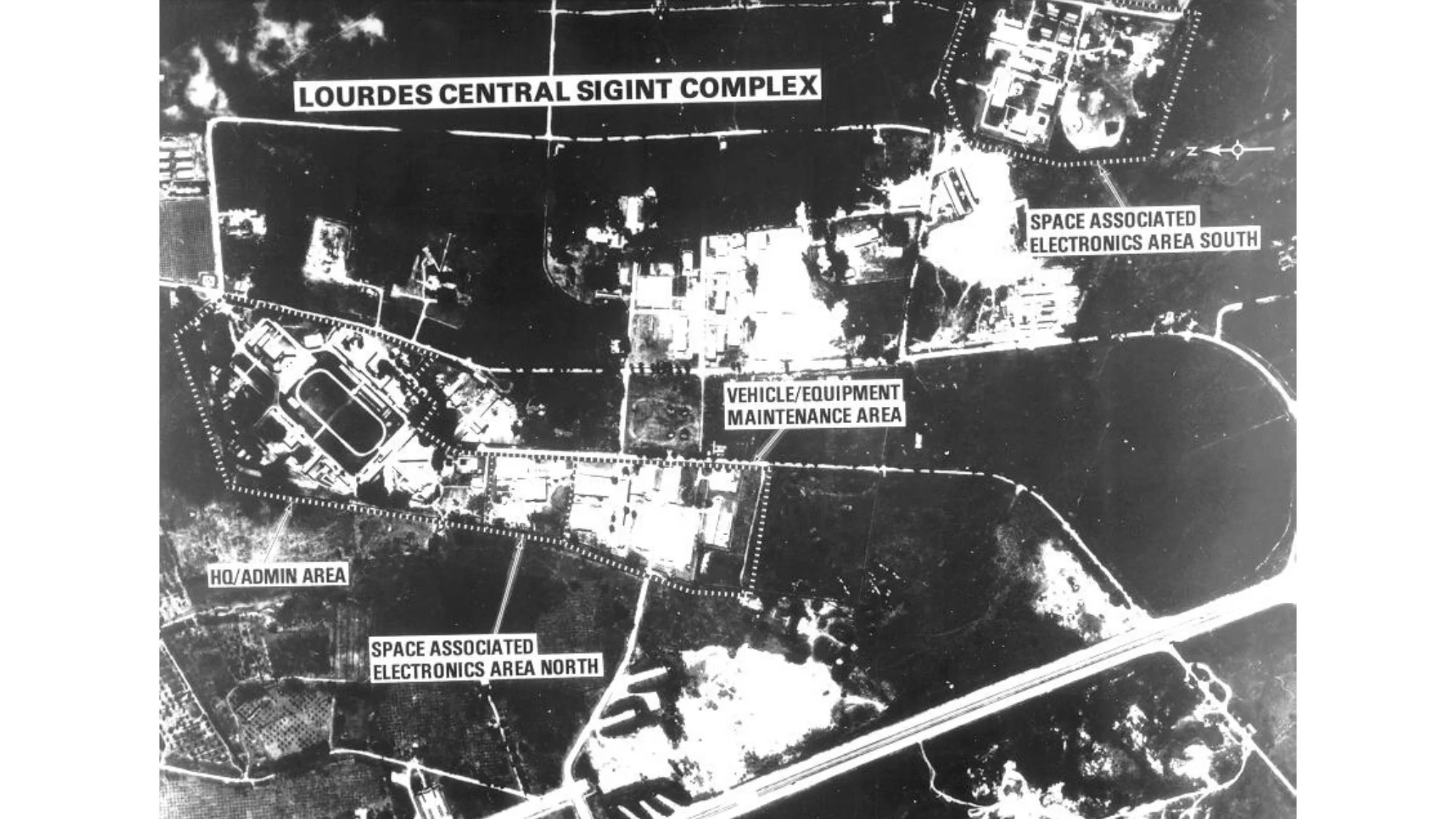
A map of the Lourdes base released by the U.S. government.
PHOTO: Federation of American Scientists
Even after the fall of the Soviet Union, the Lourdes base remained in place to the consternation of neoconservatives and Cuban-American hardliners. In 1998, Jane’s Intelligence Review wrote that Lourdes remained “the greatest single overseas GRU [Russian military intelligence] asset” and provided 60-70 percent of Russian electronic intelligence data on the United States. Two years later, a congressional report noted that there were still more than 1,500 Russian engineers, technicians and military personnel at the base.
In January 2001, the hardline anti-Castro lawmaker Rep. Ileana Ros-Lehtinen (R-FL) introduced a bill that would have prohibited forgiveness of Russian government debt until Lourdes was shuttered. Ten months later, Ros-Lehtinen, for whom Marco Rubio served as an intern in the early 1990s, got her wish.
On October 17, 2001, Russia’s President Vladimir Putin announced that Russia would abandon Lourdes. U.S. President George W. Bush congratulated Putin for taking down a “Cold War relic” and hailed the news as “another indication that the Cold War is over.”
But other U.S. politicians have had a harder time letting go of the Cold War.
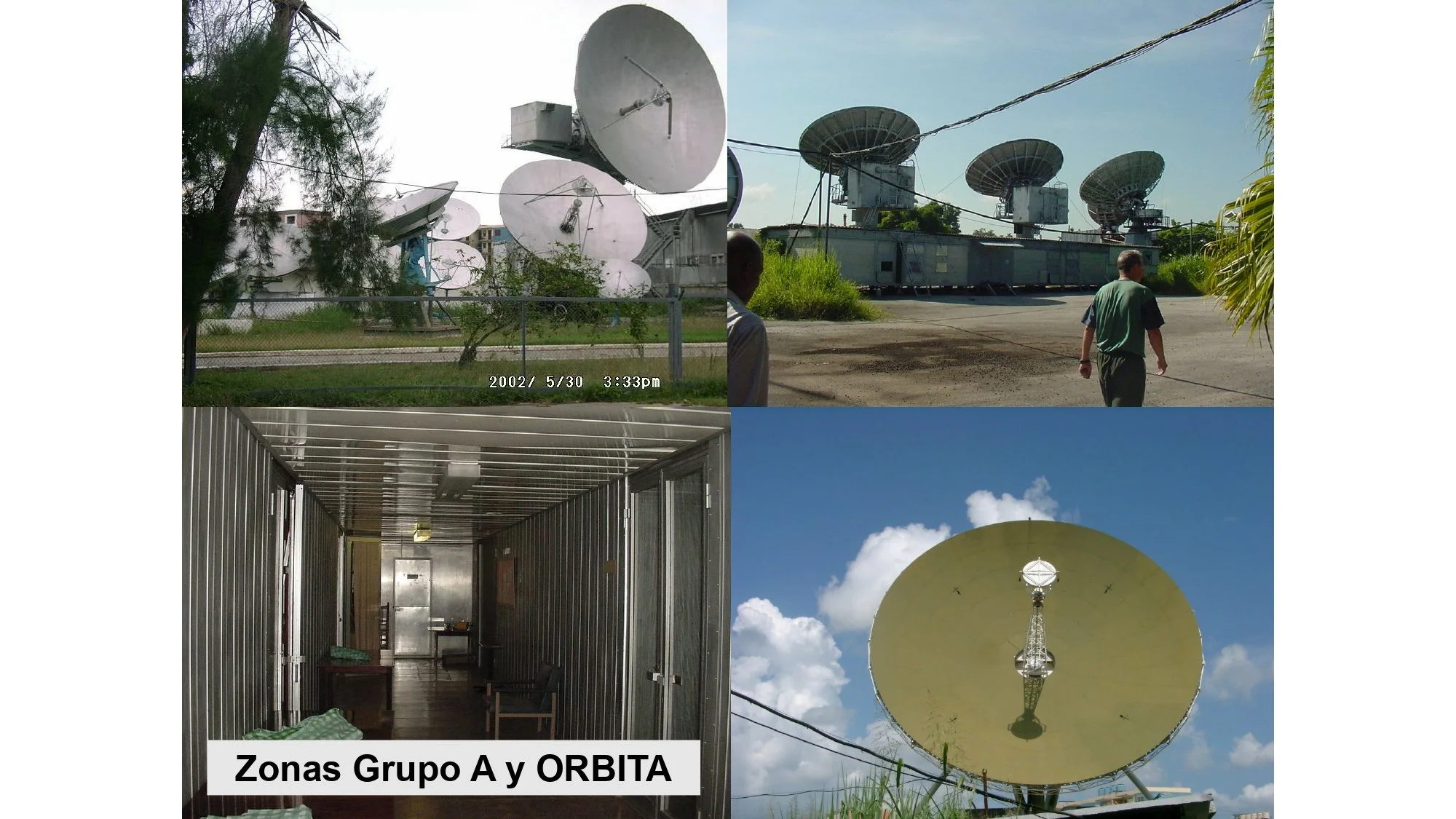
The Lourdes intelligence facility featured massive satellite dishes until Russia dismantled them when it closed the base in 2002.
PHOTO: Rafael Torralbas
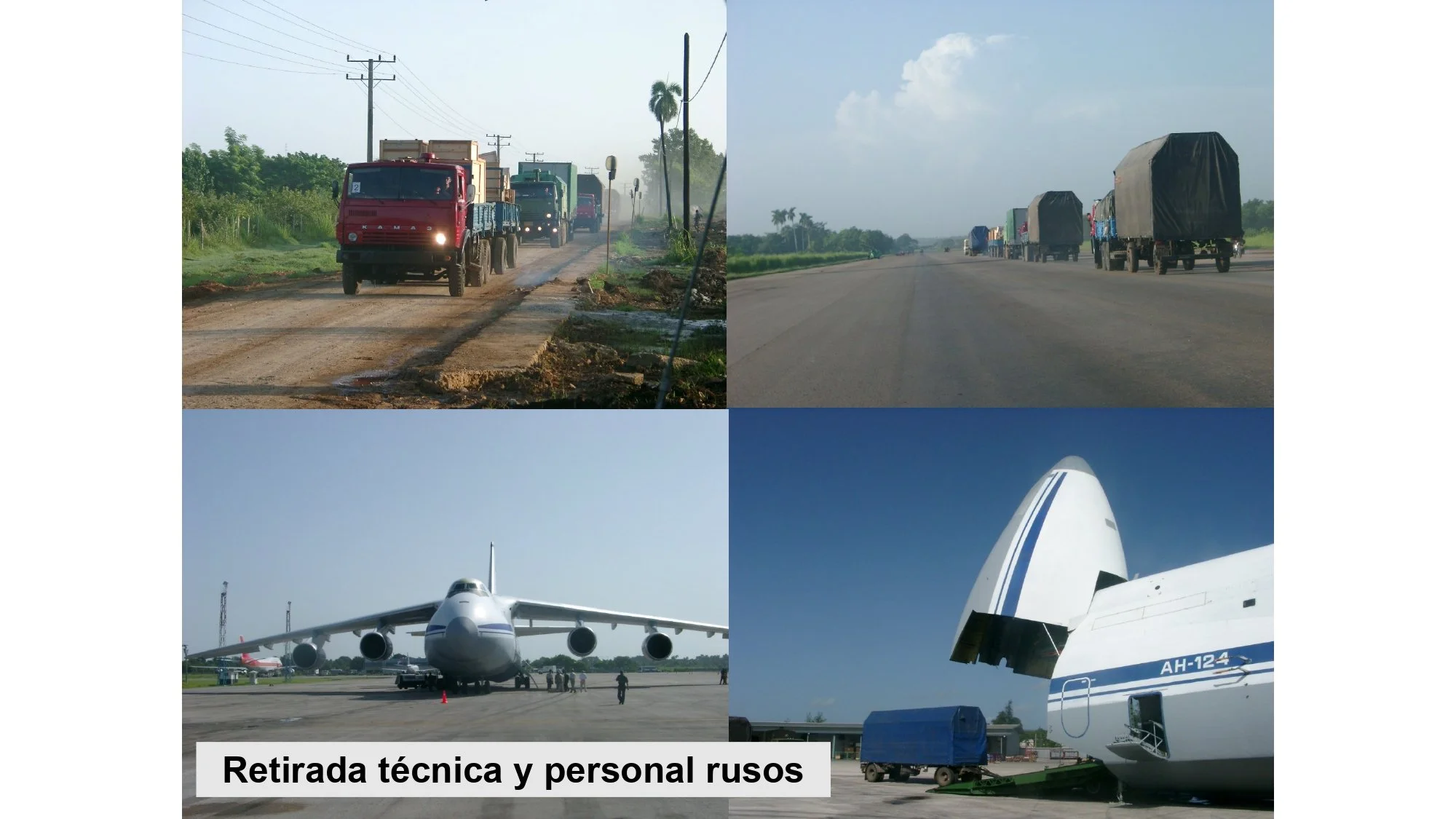
A Russia-bound Antonov An-124 Ruslan cargo plane loads equipment from the Lourdes spy base.
PHOTO: University of Computer Sciences
From Russia to China
The closure of Lourdes didn’t end talk of foreign spy bases in Cuba. Even before the Russians finally handed the base over to Cuban authorities in August 2002, El Nuevo Herald published an article claiming that Lourdes had been replaced by a Chinese base at Bejucal, a town about seven miles away.
But allegations that China was using Cuba to spy on the United States did not become a national news story until 2023, when The Wall Street Journal reported that the two countries had reached a “secret agreement” for China to establish a spy base in Cuba. The Journal, citing anonymous officials “familiar with highly classified intelligence,” said China had agreed “in principle” to pay Cuba “several billion dollars to allow it to build an eavesdropping station,” and described the agreement as a “brash new geopolitical challenge” that has “sparked alarm” in the Biden administration.
A year later, the Center for Strategic and International Studies (CSIS) released a report that used commercial satellite imagery to identify four locations in Cuba, including Bejucal, “where China is most likely operating” its alleged spy bases.
The report, which was part of CSIS’s “Hidden Reach” program to expose China’s influence around the world, provided no evidence that the alleged spy bases in Cuba, even if real, were being operated by China. CSIS recently acknowledged there was “no clear publicly available evidence” proving China’s presence at Bejucal.
“The report pulls the rumors and speculation in only one direction — to support its preordained conclusion that Chinese intelligence capabilities are expanding in ways threatening to U.S. interests, with Cuba’s full support,” said Fulton Armstrong, a former CIA analyst who also served as the nation’s top intelligence officer on Latin America. “That’s bad analysis.”
Belly of the Beast attempted to visit three of the four locations identified in the CSIS report. They appeared to be Cuban military installations but we found no evidence of heightened security or Chinese personnel.
At one site, the guard posts appeared abandoned. Part of the facility’s perimeter was lined with a rusty fence. Another section was bordered by trees. The main entrance was guarded by an elderly Cuban woman who was an unarmed civilian employed by Cuba’s Vigilance and Protection Corps (CVP), a state agency that provides security services at schools, hospitals, stores and hotels.
At another site, antennas draped in ivy and a dirt-covered satellite dish could be seen from the street.
“That’s laughably old technology,” said Armstrong after viewing video footage from two of the facilities. “It's sort of an insult to the Chinese if you're going to say that this is the future of their intel collection against the United States.”
CSIS claimed the fourth location, near Santiago de Cuba, was being used to construct a circularly disposed antenna array (CDAA), a Cold War-era technology that has become largely obsolete. The report itself acknowledges that Russia and the United States have abandoned most of their CDAAs.
A CSIS update to the report published last month said construction had “largely ceased” and there was no indication the site was operational.
The CSIS report made no mention of a Russian spy base beyond noting that Lourdes had operated during the Cold War.
But Lourdes had nonetheless resurfaced in the news in 2014 amid heightened U.S.-Russian tensions, when The New York Times reported that Russia had plans to reopen the base, citing a Russian newspaper and Russian parliamentarians who “appeared to confirm the report.” The next day, Putin said Russia had no such plans.
Not much was heard about the purported spy base until Trump’s executive order revived the narrative that the Russians had returned to Cuba, though Rubio did mention Lourdes at a 2016 Republican primary debate against Trump in Miami: “Here’s a good deal…Cuba kicks out the Russians from Lourdes and kicks out the Chinese listening station in Bejucal.”
In June testimony before the Senate Foreign Relations Committee, Rubio was asked for evidence supporting Cuba’s designation as a state sponsor of terrorism.
“Cuba continues to host a pretty substantial collection of intelligence sites on behalf of the Chinese and the Russians,” he said.
From Spy Base to Cuba’s Silicon Valley
Cuban engineer Rafael Torralbas first stepped foot on the Russian base in April 2002. Torralbas and two other colleagues were tasked with creating a university within a matter of months.
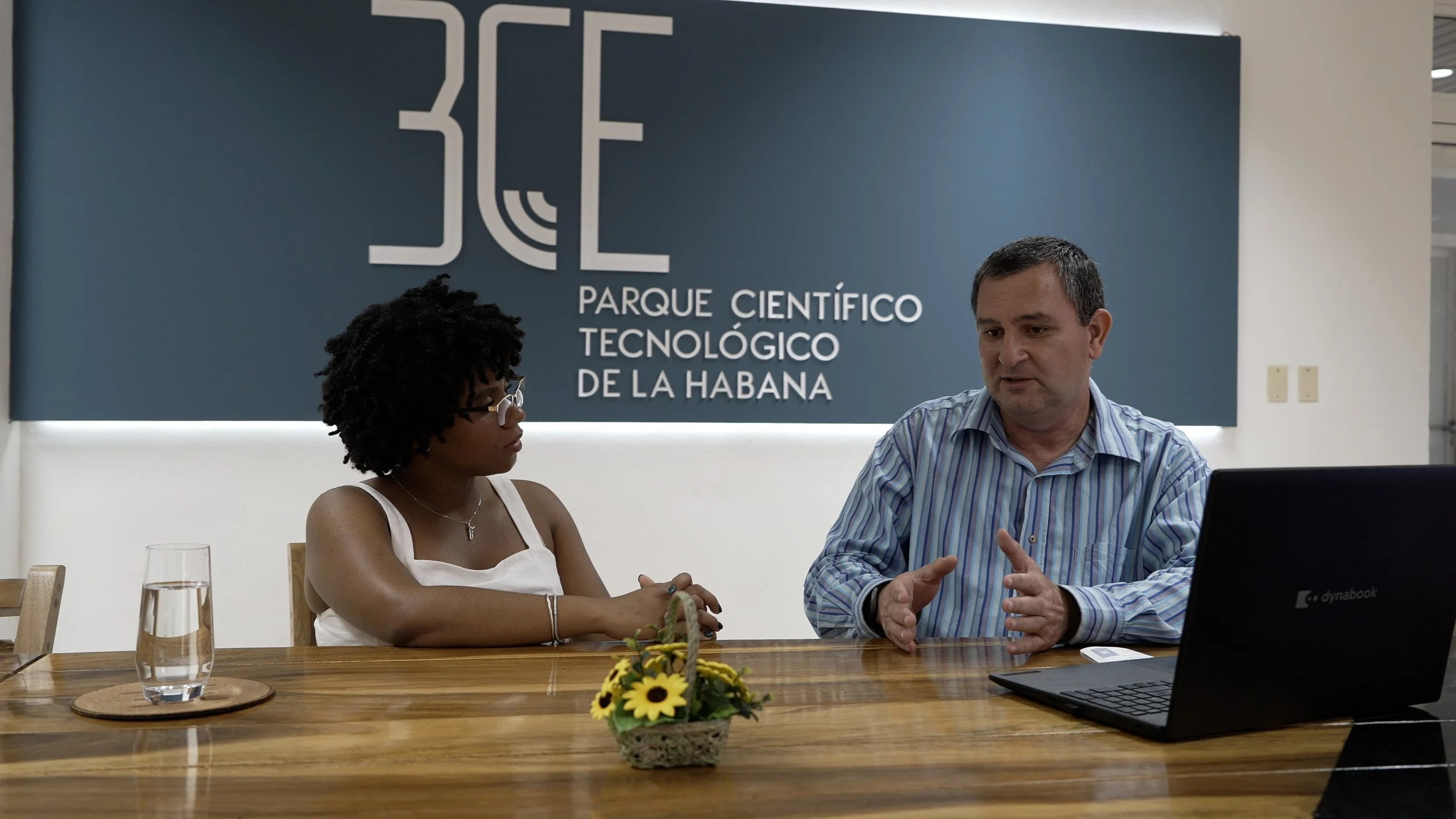
Rafael Torralbas speaks to Belly of the Beast journalist Liz Oliva Fernández. Torralbas helped oversee the transition of the Russian base into a university.
PHOTO: Alfredo Lazcano Valera
“We had the challenge of receiving the installations being left behind by the Russian officials,” said Torralbas. “There were huge [satellite dish] antennas, and I witnessed the process of dismantling them. There was technological equipment connected to the antennas, which we never saw. We knew it had been there, but the Russian officials had dismantled it all and they handed over the buildings completely empty.”
Torralbas said the Russians removed “absolutely every antenna” along with everything else, including furniture and curtains. The Russians hauled the base’s equipment home in six Antonov An-124 Ruslan cargo plane flights, according to Torralbas.
On September 23, 2002, one month after the last Russian left Lourdes, the University of Computer Sciences held its first classes on the grounds of the old base, which is located just two miles from Havana’s José Martí International Airport.
In the following years, some of the Russian buildings were torn down, while others were repurposed. The apartment buildings housing the Russian personnel and their families were converted into residences for students and professors. A daycare center became a center for medical technology. A supermarket was turned into a library.
Torralbas now serves as the president of the Havana Science and Technology Park, an innovation hub on the UCI campus that he says was inspired by Silicon Valley. Founded in 2020, the Technology Park serves as an incubator for Cuban tech startups, most of them private companies (despite claims to the contrary by hard-line politicians in Florida, Cuba’s private sector has been thriving in recent years). The park also provides technological support to foreign and state-run companies.
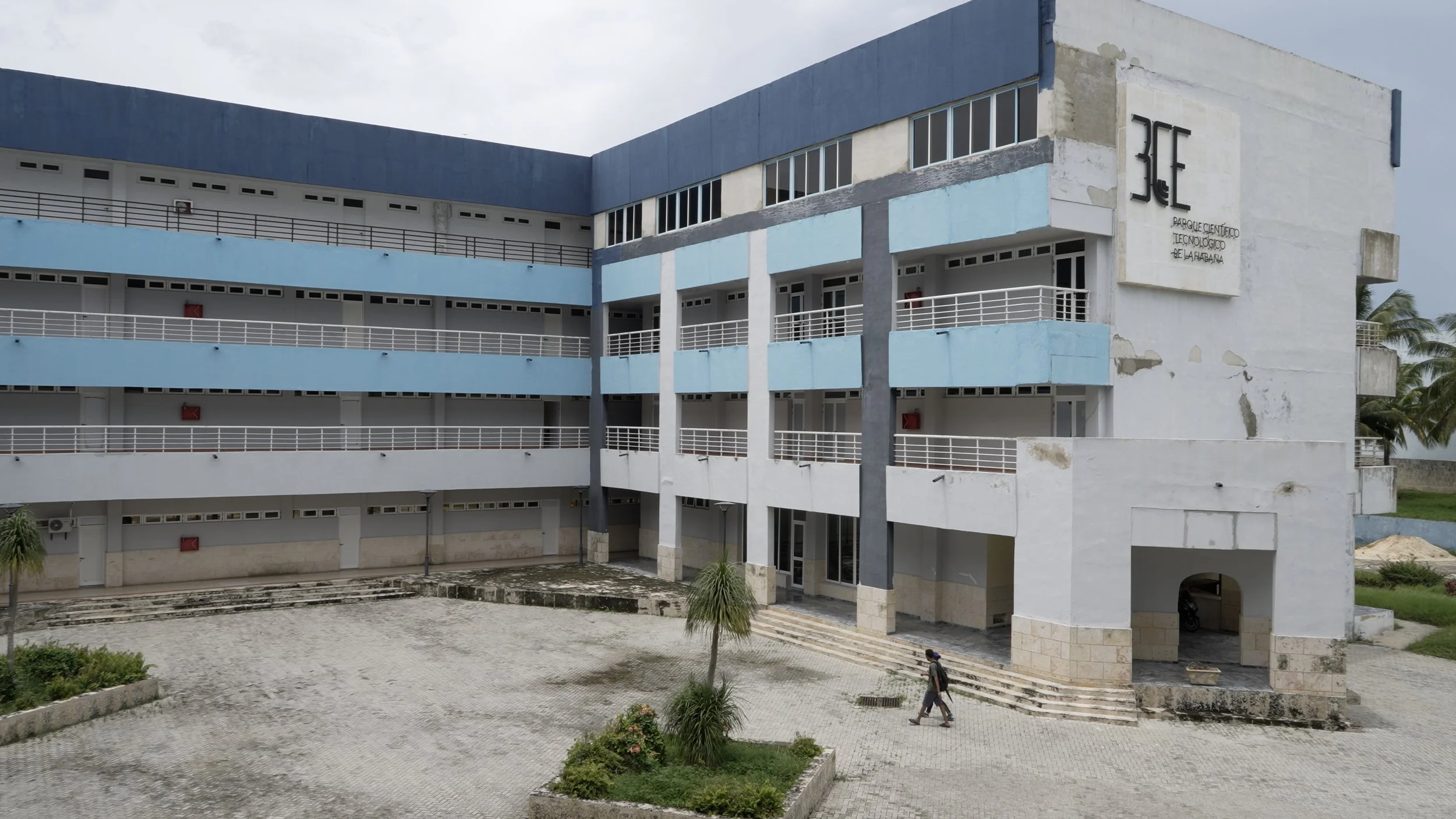
Torralbas says the idea that Lourdes was reopened “could only exist in the mind of the person who made up that news.”
“At no time, in this university, has anything existed that is not school buildings, students, computer science development centers, postgrad programs, that is, the normal activities of a university,” he said. “It’s shocking to me that someone in the intelligence community in the United States, with access to satellite images, could claim that a [spy base] exists here now.”
Inspired by Silicon Valley, the Havana Science and Technology Park is an incubator for Cuban tech startups.
PHOTO: Alfredo Lazcano Valera
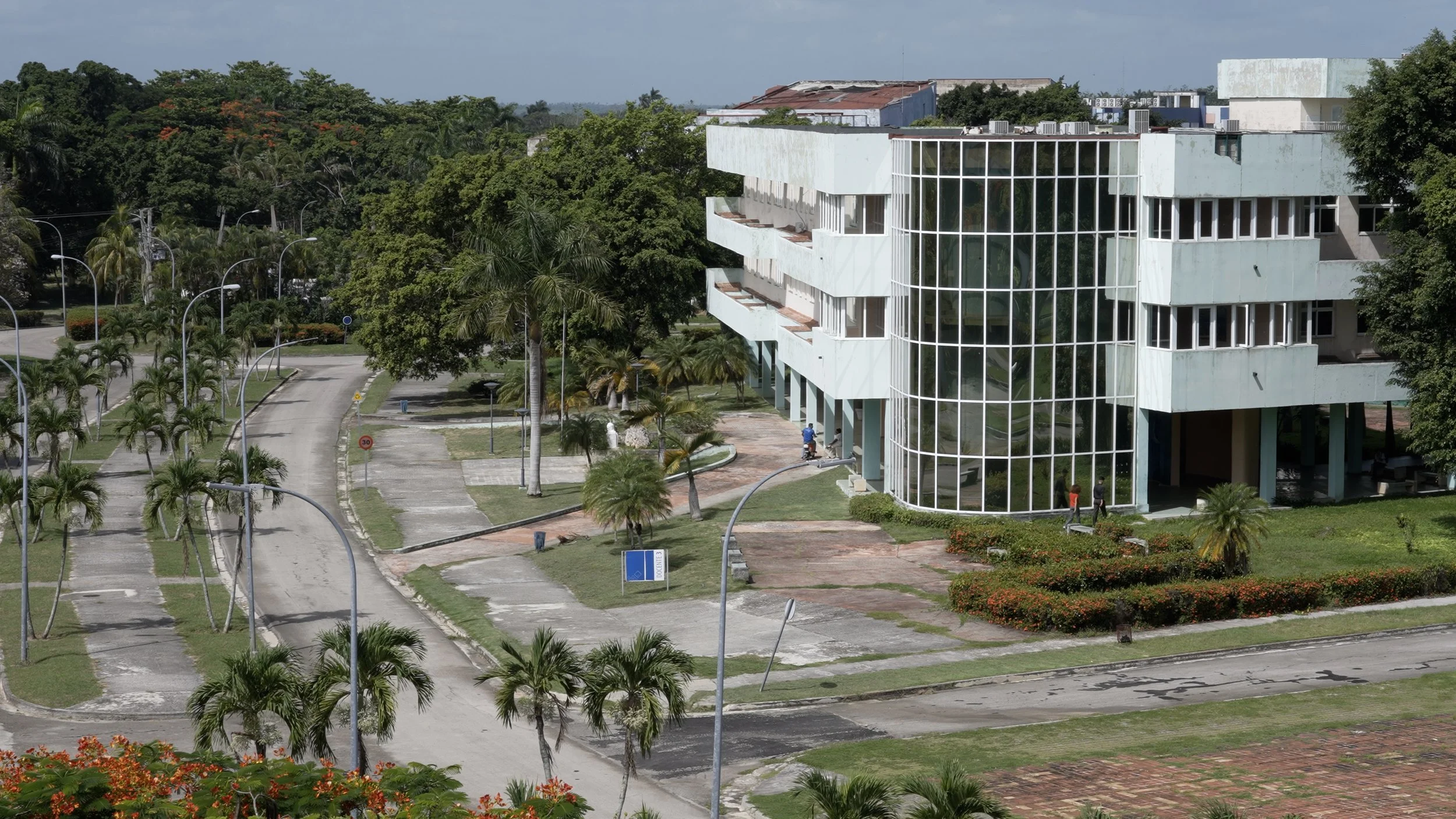
The University of Computer Sciences, which occupies the grounds of the former Russian base known as Lourdes, has graduated thousands of students since it was founded in 2002. PHOTO: Alfredo Lazcano Valera
Hunting for Russian Spies
We spent hours walking around UCI’s expansive tree-lined campus and drove around the perimeter, looking for any signs of signals intelligence or military installations. The security presence was minimal. We moved around freely and nobody seemed to care who we were or what we were doing. There was a guard at the entrance and two others in a far corner of the campus, where they watched over what appeared to be a side entrance — a partially closed door made of corrugated metal. The guards, who were unarmed, said they worked for a state-run security company. There were no military checkpoints.
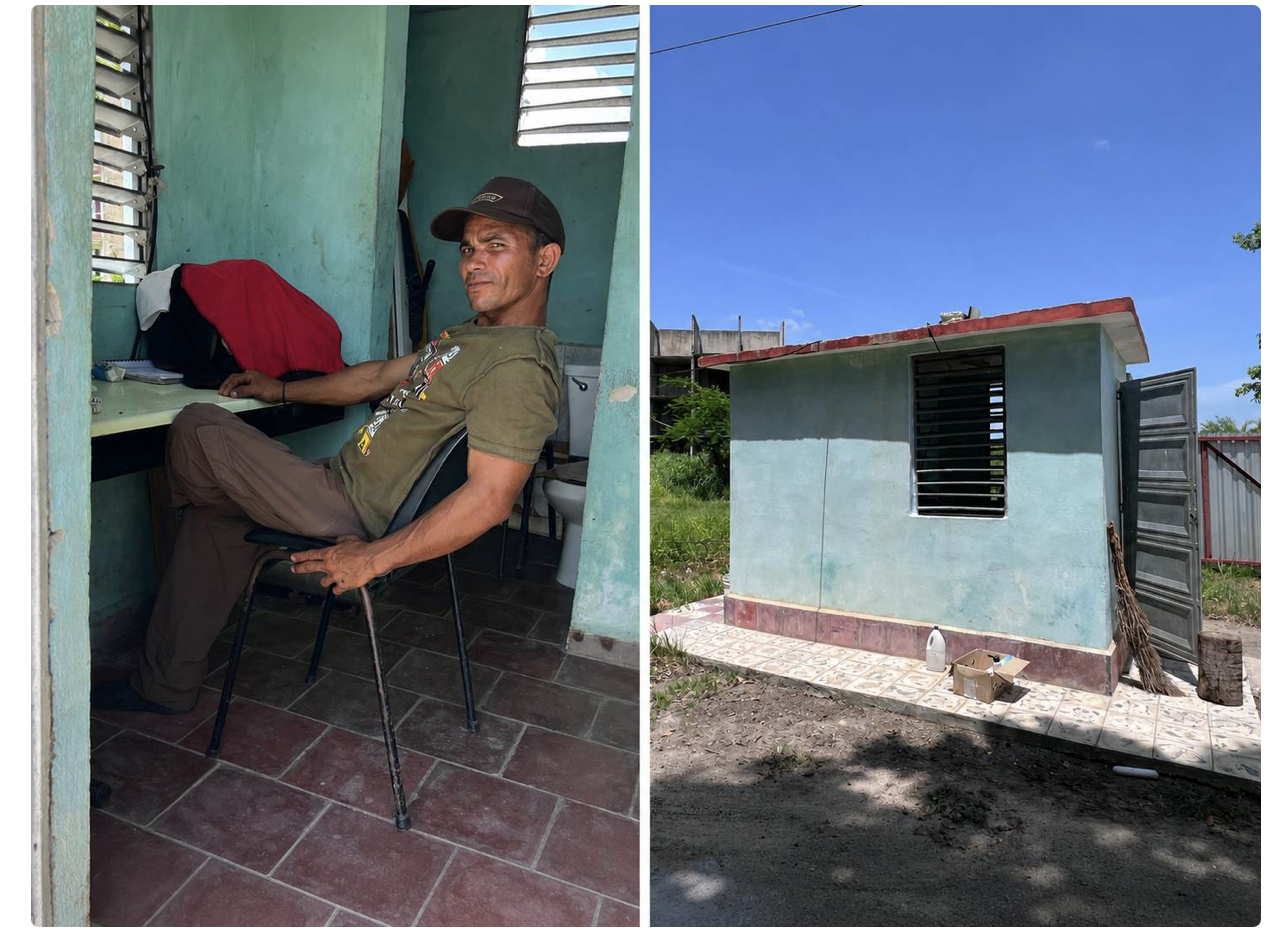
An unarmed security guard sits in a guard post near the edge of the campus.
PHOTO: Reed Lindsay
According to Torralbas, more than 80 percent of the buildings on the campus were built since the Russians left 24 years ago. New classroom buildings, computer labs and research centers now occupy land where Soviet antennas once stood.
The only remnant of the old base we came across was a crumbling watchtower near the perimeter of the campus. It was impossible to ascend as its metal ladder had long since rusted away, leaving a small piece still visible at the top.
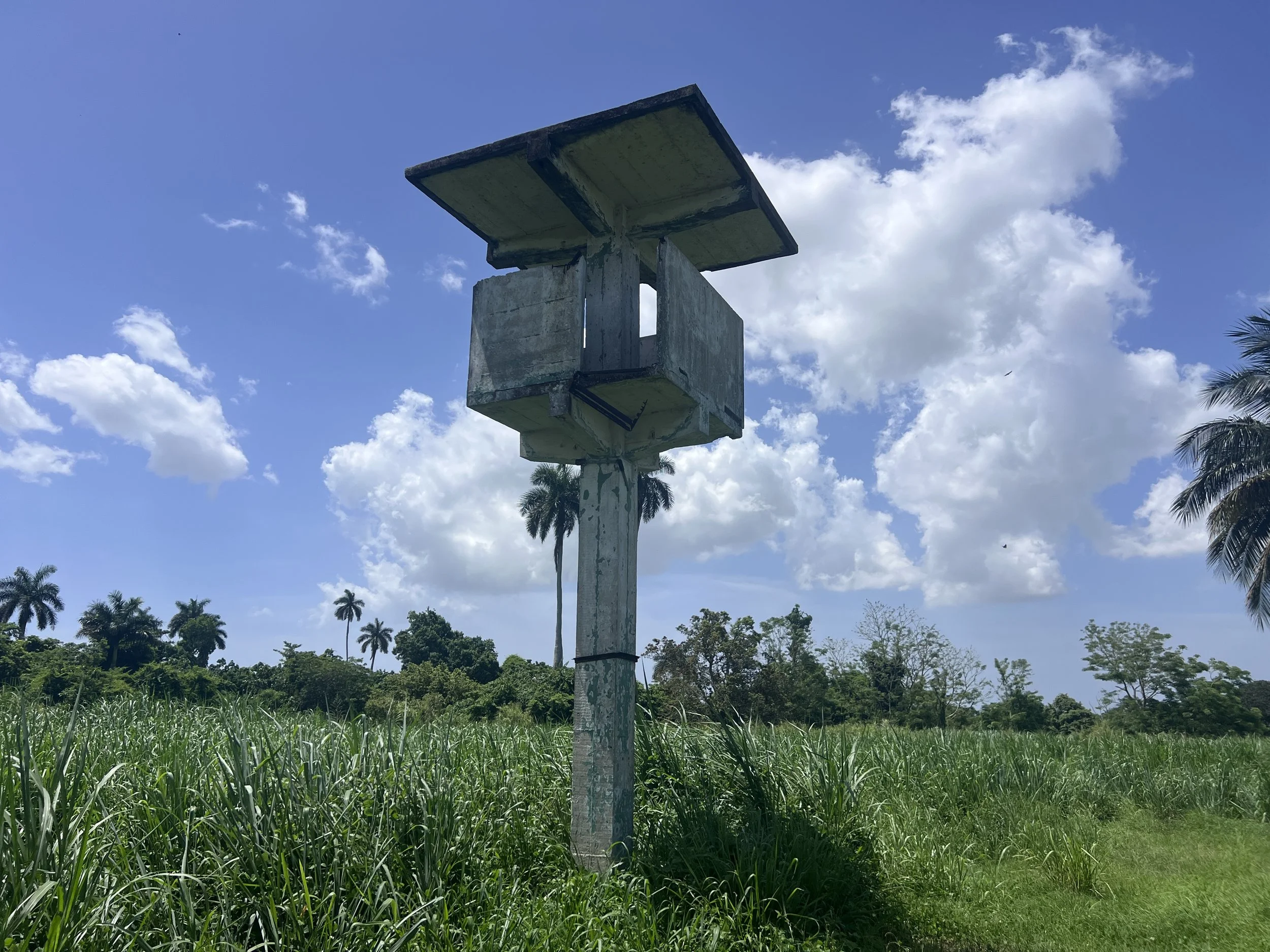
This abandoned watchtower is one of the few structures left from the Lourdes spy base in Cuba. PHOTO: Reed Lindsay
As for The New York Times’ claim that the re-opened Lourdes “bristles with antennas” — we ultimately found two mobile phone antennas belonging to ETECSA, the state telecommunications company.
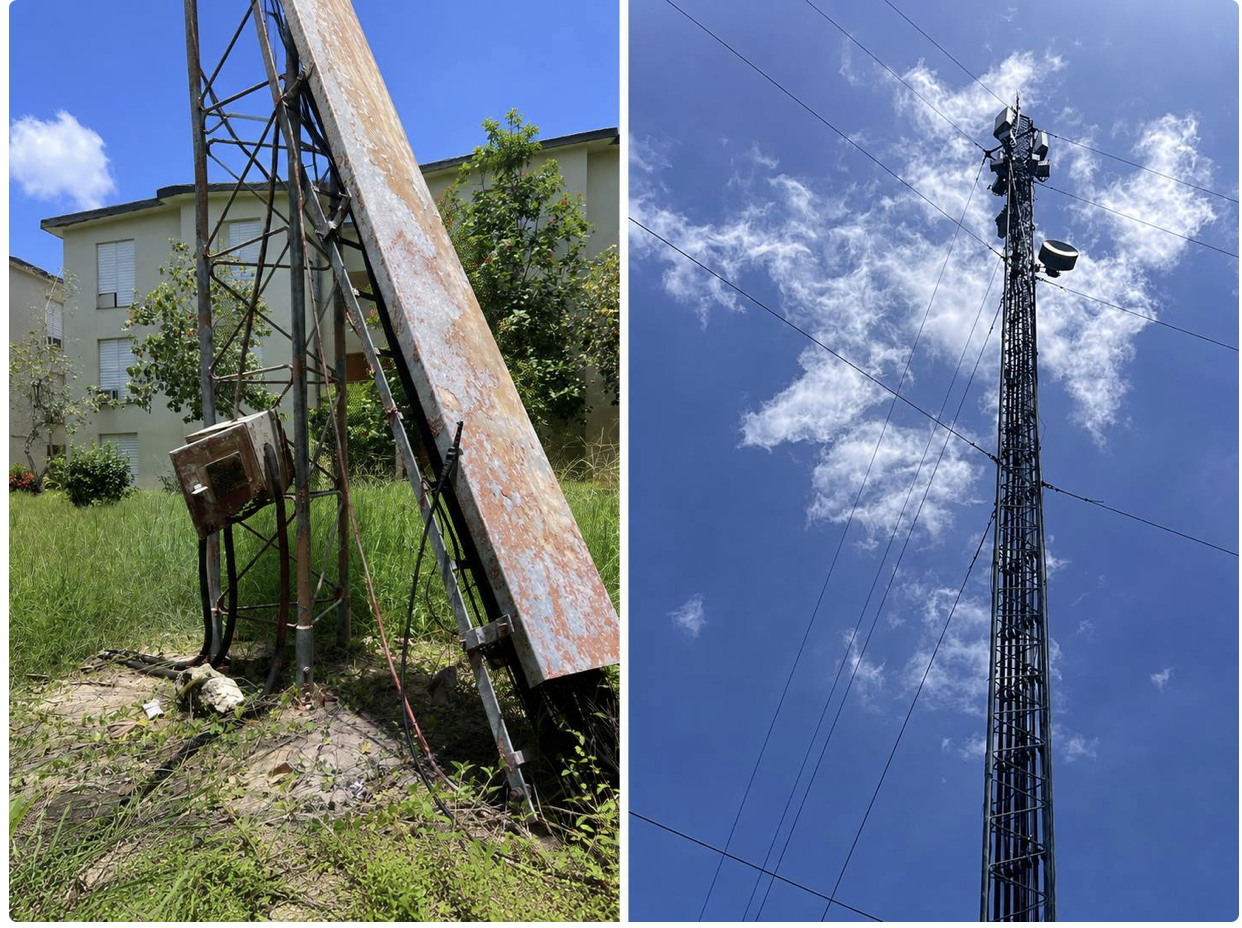
One of the only antennas that is visible at the university. University staff say it is a mobile phone antenna owned by Cuba’s state-run telecommunications company.
PHOTO: Reed Lindsay
“We're in a rural area, so this is the only way we can have service for phone calls, text messages, internet, and everything else,” explained Héctor González, a UCI graduate who now works in its communications department. “The antennas that were here [under the Russians] that were dismantled were different. They were enormous satellite dishes that you can see in some old photos, giant radars many meters high. These are just ordinary mobile network antennas.”
The campus was mostly deserted. There are more than 2,500 undergraduate students currently enrolled at UCI, but only a handful were on campus.
The oil blockade has ground Cuba’s public transportation to a halt. In February, with students and professors unable to get to class, Cuba’s universities shifted to remote and hybrid instruction, suspending most in-person classes.
“It's a shame our students aren't here today," said Aylín Estrada, a UCI graduate and now a university dean who guided us around one of the newer school buildings, which has dozens of classrooms. “Normally these hallways are full of students, smiling, learning.”
“Those buildings over there used to be for the people who worked [on the base],” said Franklin Quintana, a 37-year-old software developer, pointing to faded green five-story apartment buildings that now house university staff.
Quintana, who recently returned to the university to work as a software developer, shook his head when asked about the spy base.
“It’s a false justification. There’s no other way to understand it,” he said.
“Rubio should come and look for it himself then. Look for it and prove it’s here,” said 68-year-old Estrella Luque, a school administrator whose daughter and son graduated from UCI and are now professors. "Cuba isn’t a threat to anyone. I don't think anyone with two brain cells to rub together believes that.”
After watching her children study and later teach at the university, Luque said she was sad to see the campus without students.
“They can say we’re a failed state if they want…but no one can ignore or deny the impact of the blockade,” said Luque. “A country like this little island, which has virtually no natural resources — we’re not a major oil-producing island or a country with abundant resources — if you don't let oil in, naturally everything starts to fall apart. That's what’s happening to us. But here we are. We keep going.”
Share this Report
Related Stories