In Havana, Garbage Trucks Replaced by Solar-Powered Tricycles
August 17, 2026
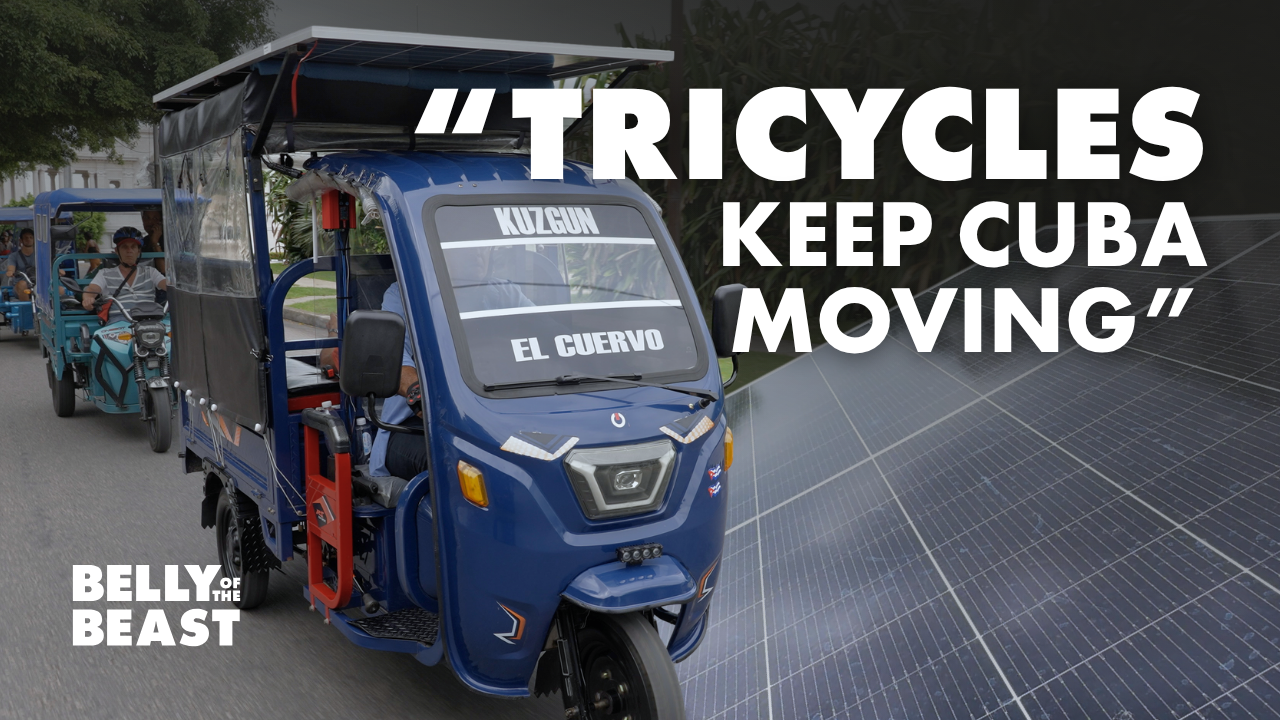
Havana has a garbage problem. El Rampeño has a solar-powered solution.
Meet the Cuban initiative using renewable energy to collect garbage with tricycles in the face of fuel shortages caused by the U.S. oil blockade.
Related Stories


Share this Report
-
“The flies, the garbage lying in the streets. I feel sad to see my Havana so dirty and unhygienic,” said Lilian Pérez, El Rampeño’s driver.
“The El Rampeño project was created to collect recyclable materials and solid waste,” according Yasiel Hernández, president of El Rampeño, who added “As a result of the situation we have with the United States, especially the fuel issue, the government no longer has enough fuel to collect the garbage”
“Our alternative was using tricycles to pick up the trash. We have 30 tricycles. So far, we have 10 operating,” Hernández explained.
“The Solinera is a facility equipped with solar panels, an inverter, and a battery system that stores electricity. Whenever we arrive, we have power available to charge the equipment,” said Heriberto García, driver with El Rampeño.
“Before we began, we held public meetings to explain when the tricycles would come by,” Hernández recalled.
“Each tricycle is responsible for a specific area. We collect the bags left by residents at collection points in each neighborhood,” García explained.
“Until now, the government has always collected garbage for free. El Rampeño is the first private garbage collection company. People are charged 100 pesos a month (about 14 USD cents). We don’t charge vulnerable people. They receive the service for free,” Hernández explained.
“People agree with paying. If El Rampeño doesn’t cover the cost, other family members can help pay for it,” a customer, Irina Sierra, explained.
“They are punctual. They come by in the afternoon. Sometimes they even come by twice, just in case one got missed, to make sure they picked it up.” “It’s working. At least here in this area, it’s working.” These are public opinions about the service.
“El Rampeño has enabled us to eliminate all the mini-dumps we had here in the community, and we haven’t accumulated trash in our surroundings,” Sierra said.
“I feel good about what I’m doing. I can see the results of the work we’re doing. When you walk through the streets now, you don’t see the piles of garbage that used to be on almost every corner of Havana. At least here in Vedado, we feel like things are different,” García concluded.
Support Independent Journalism from Cuba