
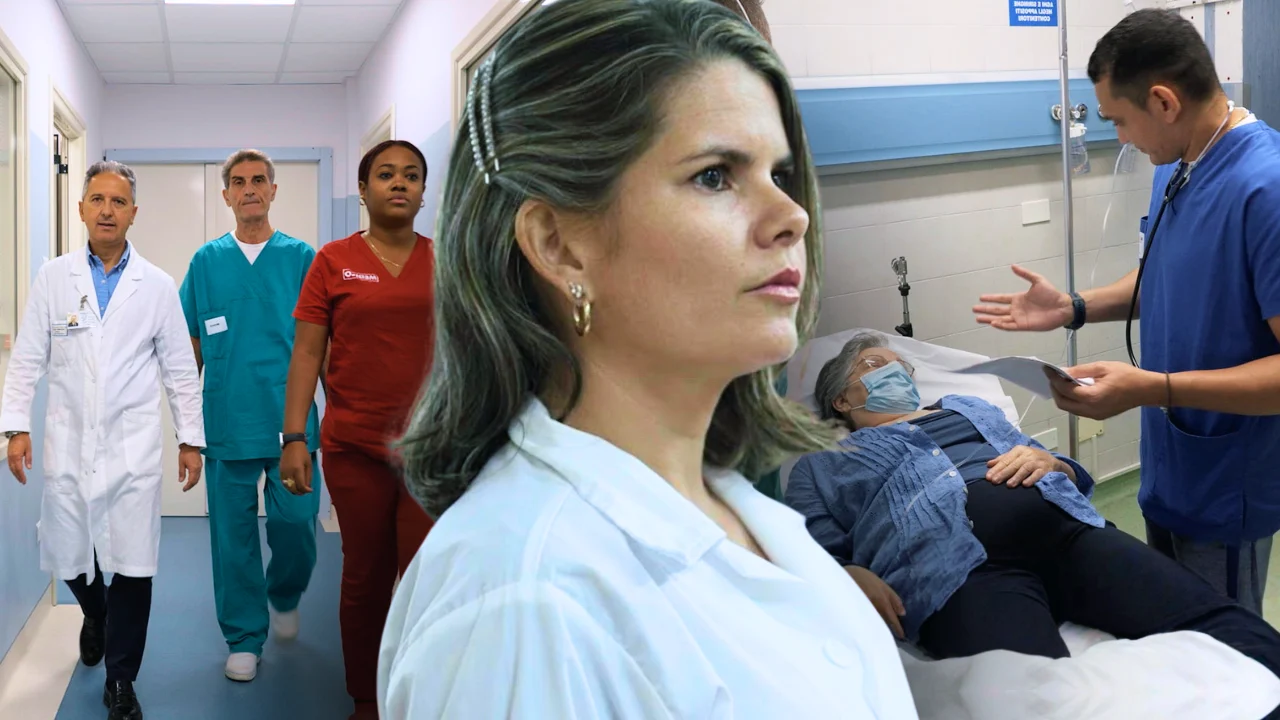
FROM CUBA
TO CALABRIA
An Educational Viewing Guide
From Cuba to Calabria
An Educational Viewing Guide
Table of Contents
P.03 Using This Guide
P.04 About the Film
P.05 Key Historical Background
P.09 Health in and by Communities
P.14 Sowing Medical Internationalism
P. 23 Cuba’s Health System Today
P. 25 Health Cooperation Against the Odds
P. 27 Discussion Prompts
P. 28 Calls to Action
P.29 Resources for Further Study
Historical background authored by Conner Gorry
Impact Producing by Sanjna Selva
& Yurema Perez-Hinojosa
Graphic Design by Wilfredo Valdez
Photos courtesy of Belly of the Beast and
Medical Education Cooperation with Cuba (MEDICC)
Using This Guide
This guide is designed to support your engagement with From Cuba to Calabria across a range of settings—including classrooms, community discussions, independent viewing, and organized screenings. It offers background context, discussion prompts, and resources to help explore the film’s central themes, from global health and scientific innovation to the real-world impacts of U.S.–Cuba policy.
You are encouraged to use this guide flexibly. Select the sections, questions, and materials that best fit your needs—whether you are leading a classroom discussion, facilitating a group conversation, or reflecting individually. Not every section is meant to be used at once.
For more ways to take action, as well as further resources on the history of U.S.–Cuba relations and Cuban healthcare and biotechnology, see the reference materials included at the end of this guide.
Learn more about this film and discover other short films from Cuba to the world.
Directors: Daniel Montero & Gabriela Tamarit
Historical background authored by Conner Gorry
Executive Producers: T.M. Scruggs,
Babochki Collective, Reed Lindsay
Impact Producers: Sanjna Selva
& Yurema Perez-Hinojosa
Fiscal Sponsor: Center for Independent Documentary
About the Film
From Cuba to Calabria is a short documentary that follows a group of Cuban doctors who leave their families behind to serve a two-year medical mission in Calabria, Italy’s most impoverished region.
As Calabria’s public healthcare system buckles under staff shortages, austerity, and decades of economic neglect, Cuban physicians fill a void by stepping into hospitals and clinics that are struggling to stay open. In a region where the ’Ndrangheta mafia has siphoned public funds, infiltrated construction and healthcare contracts, and drained resources meant for social services, entire communities have been left with fragile access to care.
The film begins in Cuba, capturing the doctors’ final days at home before their departure, and follows them as they navigate language barriers, cultural differences, and political controversy abroad. Celebrated as heroes in Cuba yet denounced by some U.S. officials as participants in “forced labor,” the mission becomes a lens into a much larger debate about international solidarity, global health inequality, and who gets to define humanitarian aid.
From Cuba to Calabria offers rare inside access to a Cuban medical mission in Europe — revealing the human stories behind a program that has become both a lifeline for underserved communities and a flashpoint in international politics.
Key Historical Background
All photos courtesy of Medical Education Cooperation with Cuba (MEDICC)
“We volunteer. Each person has to make that decision. For me, my profession is my life. And, like the others selected, I’d served abroad in health emergencies before. When I read about Ebola, I signed up because help was needed right away.
– Dr. Félix Baéz, Henry Reeve Contingent, Sierra Leone (2014)
Like all Cuban emergency medical volunteers serving in the most dangerous and contagious places, Félix Baéz is a tough cookie. A veteran of the Henry Reeve Contingent’s 2005 Pakistan mission, he joined 255 other Cuban medical professionals who answered the call to help fight Ebola in West Africa in 2014. After undergoing specialist in-country training and receiving certification in WHO protocols, Baéz worked six-hour shifts, seven days a week. He donned full hazmat gear to treat the most critical patients. Several died. Then, he contracted Ebola and nearly died himself. His first words days after fighting for his life: “I’m going to be okay. And I’m going back to Sierra Leone.” And that’s precisely what he did.