Why this Cuban American Returned to Cuba | Episode 6: U.S. Voices Against the Blockade
June 23, 2026
Why did one Cuban-American activist return to the island she left as a child?
In our latest episode of U.S. Voices Against the Blockade, Daylín Marrero reflects on leaving Cuba at eight years old, returning years later and why the U.S. blockade drove her family's decision to emigrate.
Related Stories
Share this Report
-
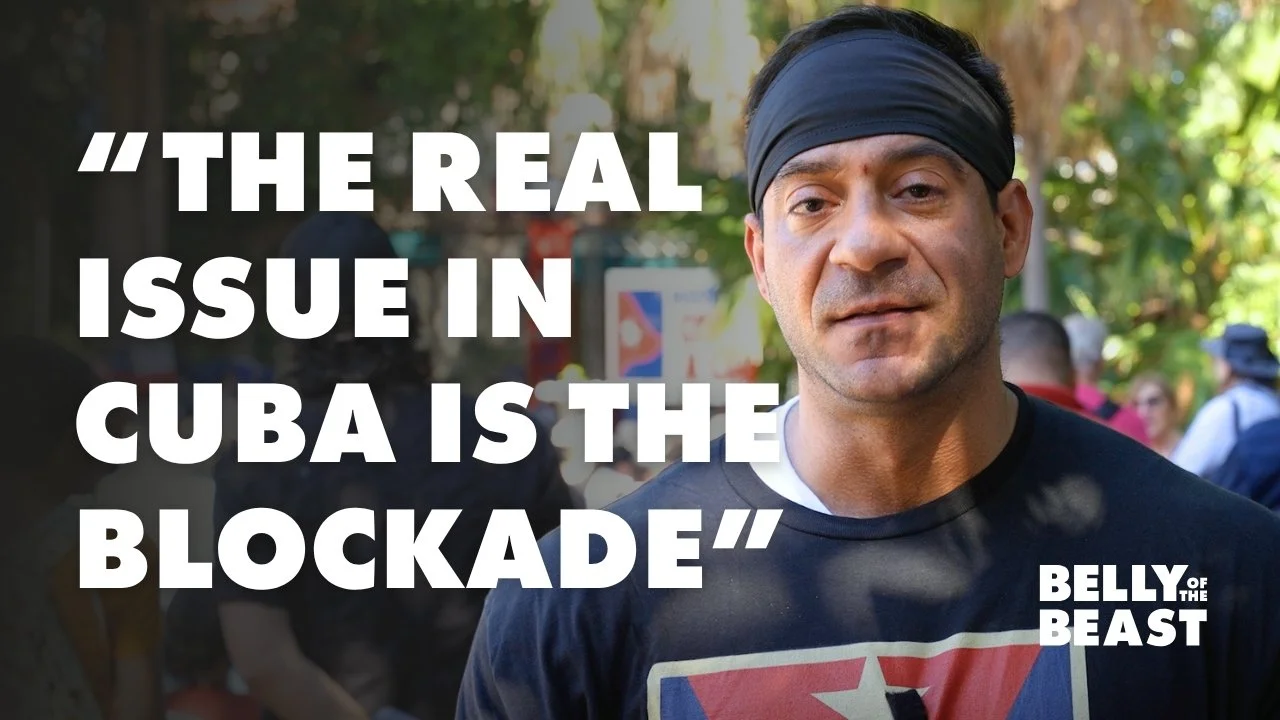
"What I am and what I believe in is a direct result of how I grew up in the United States, which was an immigrant daughter, with immigrant parents, who were extremely exploited as immigrant workers in the U.S.," said Daylin Marrero, Cuban-American activist.
"I was born and raised in Cuba, up until when I was 8 years old," she said.
"It was hard for me to immerse myself in American culture. As an immigrant kid, you kind of feel ashamed, for coming from a different culture where you don't know English," Marrero said.
"A part of me wanted to reject the Cuban side," she added.
"After I left Cuba, there was a complete disconnect to my family here in Cuba," the activist said.
"When I was about to turn 15, I came back for the very first time, so I had my quinceañera here in Cuba. It was like a huge family gathering of everybody across the island, because I also have family in the country," Marrero said.
"It was also the first time that I found out that I had little brothers here on the island. And it drove me to want to have a cultural unification, with my island, with my country," she continued.
"From then on, I kept visiting every year or two," Marrero said.
"Cuban diaspora is very disconnected from the Cubans actually living on the island. And there's a lot of misinformation online, which without deep historical context, a lot of Cubans, young Cubans take it completely at face value and don't do deeper research or understanding of why does Cuba exist in this society as a completely blockaded country," she said.
"It's just a complete rejection of your home country, of your pride and your origins," Marrero added.
"The reality is I left Cuba, my family left Cuba as a direct result of what the U.S. has done and has been doing for the past 65 years," the activist said.
"It's not for political reasons. It's because of the U.S. blockade and blocking us from being able to access basic medicine and basic resources," she said.
"I think everybody in my life knows 100% that I'm Cuban and I'm not afraid to show it," Marrero said.
"What I am and what I believe in is a direct result of how I grew up in the United States, which was an immigrant daughter, with immigrant parents, who were extremely exploited as immigrant workers in the U.S.," she continued.
"I, as a kid, had to go with my mom to construction jobs, and sometimes I'd come home, covered in cement because she couldn't afford childcare. And that's the reality for so many Americans and working-class people in the U.S.," Marrero said.
"And I think that's what really radicalized me in understanding that the system that the U.S. operates under is not a system for the social benefit and social well-being of the people that reside in a society," she said.
"The fact of the matter is, a lot of Cuban Americans, working-class people in the U.S. are exploited. They're working-class people exploited by their own bosses, by their own federal government," Marrero said.
"It's their labor that's taxed. And those taxes are what creates the U.S. blockade," she added.
"I think that's the reason why people living in the U.S. should understand that we have a very important and critical position to ensure that the society the Cubans are trying to build since 1959, doesn't disappear," the activist said.
"Because that is the beacon of what a society should be existing towards, which is a society that exists for the well-being of every single human," Marrero continued.
"And I think that is the purpose as to why the blockade exists. To make sure that you can point at a socialist project that's impoverished. But in reality, that impoverishment is directly manipulated by the biggest imperialist power of the 21st century," she said.
"The Cuban socialist project does need transformative change. Every single one of my family members here strongly believe that if any change needs to happen or were to happen, it needs to happen with Cubans on this soil," Marrero concluded.
Support Independent Journalism from Cuba