Why Students From the U.S. and Around the World Study Medicine in Cuba
June 8, 2026
For decades, the Latin American School of Medicine (ELAM) in Cuba has trained tens of thousands of students from more than 100 countries, including hundreds from the United States and across the Global South.
Rooted in the idea that healthcare is a human right, Cuba’s medical education system seeks to train doctors who are both scientifically skilled and socially committed. Many ELAM students do not wait until graduation to put those values into practice.
In this video, we hear from two doctors from the United States who studied at ELAM and last year led a brigade of mostly African medical students to Guinea-Bissau to provide health education and medical consultations.
Their journey offers a glimpse into ELAM’s broader mission: preparing healthcare professionals to serve communities often left behind and to see medicine as a tool for social justice.
Related Stories

Share this Report
-
Cuba has trained tens of thousands of medical students from over 100 countries. They have studied at the Latin American School of Medicine (ELAM), one of the largest public medical schools in the world. Hundreds of U.S. doctors have graduated from ELAM.
“In terms of those of us who come from marginalized communities in the United States, being able to now study, become doctors, and return to our communities,” said Dr. Samira Addrey, ELAM Class of 2020, “Cuba has been doing that, training people from marginalized communities from all over the world for decades.”
“It’s one of the key characteristics that distinguish our training in Cuba,” Addrey continued. “In Cuba, it’s already built into the system, a requirement for us to help other people. We see it lived in all of our teachers. Almost all of them are people who have helped and completed a mission. It’s more than just a mantra—it’s something they practice.”
“It’s actually something that they practice,” Addrey reiterated.
“And that’s how we’re going to be able to move forward as doctors and as students of science and conscience,” said Abeeku Ricks, ELAM Class of 2016.
“When you asked me that question of why, as a U.S. citizen, I would travel hundreds of miles to Havana to study at the Latin American School of Medicine, I could have stayed in Atlanta,” Ricks said. “I could have gone to any of these medical schools.”
“But I decided to go to Cuba,” he continued. “We learned the same scientific pathways, the same treatment, the same diagnosis. But there was something different about the Latin American School of Medicine—the level of consciousness that the students are obligated to have.”
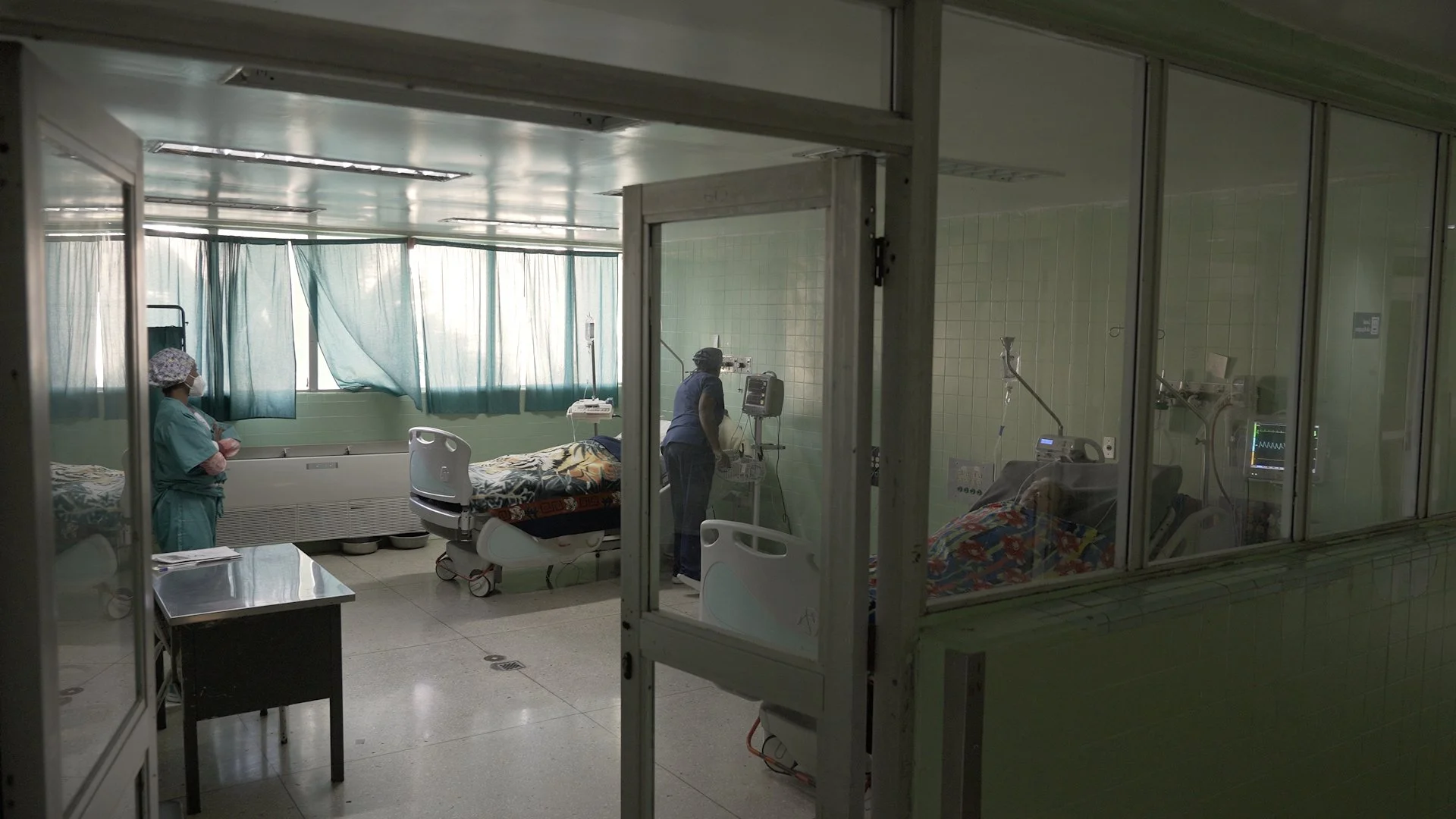
In Cuba, healthcare is a human right. Healthcare is accessible and free to all.
“It’s one of the key characteristics that distinguish our training in Cuba,” said Addrey. “It’s already built into the system, a requirement for us to help other people. It’s lived because we see that example in all of our teachers.”
“Our exposure to patients from the very start is what sets us apart from other students in the world,” she added.
“We have six, seven years of clinical exposure, and that is not just in the hospital,” Addrey explained. “That’s in the community, and in an integrated way of practicing medicine that does not really exist in many parts of the world. For us as graduates, understanding the difference and then going back to the United States and seeing what doesn’t exist.”
“A lot of my colleagues when we graduated from medical school in the United States, we have $500,000 worth of debt,” said Ricks. “We’re trying to figure out for the next ten years how we’re going to pay it back.”
“As U.S. graduates, we don’t really have time to think about people who need us the most,” he continued. “But when you go to the Latin American School of Medicine, you get a full scholarship. As a U.S. citizen, you get to come back to the United States and practice in different communities where a lot of doctors don’t want to go. It comes with a different level of satisfaction.”
Last year, Abeeku and Samira took ELAM students from several African countries on a mission to Guinea-Bissau. The student health brigade was named after Bissau-Guinean revolutionary Amílcar Cabral.
“As an African, it’s important for us to understand how central Cuba has been in our liberation, not taking anything from us, but giving us a lot,” said Dr. Samira Addrey. “Doing this through the health brigades, we’re able to understand the health disparities we face locally and use the tools that Cuba teaches us in medical school to dissect those problems and create recommendations for our communities.”
“Doing some free consults in the community, canvassing the community, knocking on doors, taking medicine to the people,” said Ricks. “The people expressing their different medical issues.”
“The heart rate is 54,” a student is heard saying.
“We went to a hospital. We did free consults,” Ricks added. “These are the things that the Latin American School taught us. It’s the responsibility of the doctors, the students—the products of ELAM—to continue this vision of bringing medicine back to the community.”
Cuba not only trains doctors at ELAM. It has also helped run medical schools in other Global South countries.
“It’s very clear when you see how Cubans have been able to set up these institutions in different countries,” said Addrey. “Guinea-Bissau is one of nine faculties that exist in different countries. The amount of resources it takes to build not only a medical school, but personnel in those schools annually—these are doctors who are there all year long.”
“They only have a break when the students have a break in the summer,” she added, “and they go back year after year to teach generation after generation.”
“I just feel like this brigade transformed some of these students,” said Ricks. “I’ve witnessed it. Some of these students are inspired, motivated. This is something I would like to see more students experience. Hopefully we can build an international camaraderie of doctors.”
“I’m very grateful for the medical training I have,” said Addrey in closing, “but I can say that the human training, the quality of character building I’ve had by being in this country that is under siege, I cannot get anywhere else.”