Vic Mensa in Cuba: Black Culture, Blackouts and Resistance
May 11, 2026
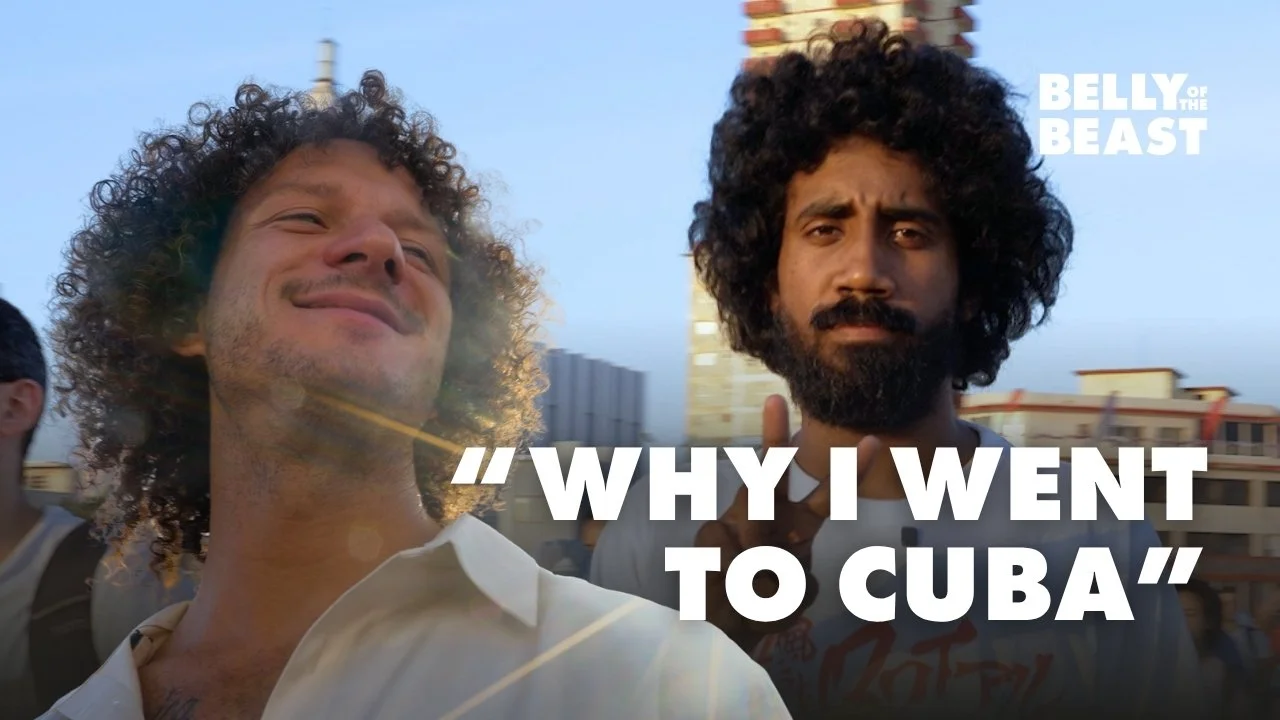
Vic Mensa came to Cuba — but not as a performer. The Chicago rapper arrived as part of the Nuestra América Convoy, an international solidarity mission bringing humanitarian aid to an island under one of the longest economic blockade in modern history.
“From a U.S. perspective, the pain of the world is often out of sight, out of mind,” he said in an interview with Belly of the Beast journalist Liz Oliva Fernández. Vic came to Cuba to see the impact of U.S. policy firsthand. Cuba didn't just move him politically. It moved him personally, as a Black man, as a father, as someone who carries both America and Africa inside him.
Walking deeper into Old Havana, he kept seeing faces that looked like home. Like Chicago. Like Ghana. Like family.
“What I like the most about this experience is seeing that there are Black people on this planet who can't be broken,” he said.
Related Stories
Share this Report
-
"Cuba is being strangled by a total blockade of fuel to the island. Thousands of lives savings surgeries are halting, food is wasting and 10 million people are facing rolling blackouts," said Liz Oliva Fernández, journalist with Belly of the Beast.
"That's Vic Mensa, the Chicago-born rapper, activist, and son of a Ghanaian father walking the streets of Havana. Mensa came to Cuba not as a tourist, but as part of the Nuestra América Convoy. During his last day on the island, we talked about everything from Black culture to the struggle, from the music to the movement: Vic saw Cuba up close and personal," she added.
"From an American perspective, the pain of the world is often out of sight, out of mind. Words like 'blockade' or 'fuel embargo' don't necessarily conjure the connotation of babies wasting away. It's a very genocidal action that's being taken by the United States government," said Vic Mensa, Chicago-born rapper and activist.
"Nothing makes more sense than seeing in your own eyes how it's affecting babies, kids, pregnant women. It's like it's becoming real. You can touch it," Oliva Fernández said.
"It becomes very, very real. There's nothing worse as a doctor than to know you can save a patient, but be unable to because of the circumstances. And being in the hospital, he's telling us all the ways that not having fuel prevents them from surgeries, prevents them from powering the equipment, prevents them from repairing the equipment. It prevents them on a basic level, from being able to exercise the ability that they have to save lives. All kinds of medical devices that were no longer usable because the parts to repair the devices couldn't reach the island because of the embargo. That was one of the most visceral depictions of how genocidal the blockade is," Mensa said.
"And how does that make you feel?" the journalist asked.
"I got a two-year-old son. That was the most emotional moment for me of being here. Seeing these two twins that were born under 5 pounds. Luckily, people have brought formula recently in the past few days that's helping those children. But seeing them so vulnerable, with their lives in the jaws of imperialism, that just broke me," the rapper said.
"We have to take into consideration that this is just one hospital that is in the center of the capital, so they have the most resources. You can imagine how it is in the rural areas, outside of the cities. How many other kids don't have access to that [level of care]?" Oliva Fernández said.
"I am curious about if the Cuba that you are seeing now is like how you expected it to be?" she asked.
"I feel like it looks, tastes, smells like how I imagined it. As we were walking through the city yesterday in the middle of the blackout, still there are people outside playing music and dancing and just refusing to be broken. My friends asked the elders today if they knew, when they joined the Revolution at fifteen, that the actions they were taking would have such a profound effect on African people around the globe. And these OGs were like, 'We do it because we believe in internationalism. We believe that liberation cannot come in isolation. We believe in the need for global connected struggle.' They have the spirit of José Martí and the balls of Antonio Maceo and they'll never surrender. Such a powerful people," Mensa said.
"The more you get into Old Havana, the more Black people you see," the journalist said.
"That's another thing that I think strikes me about Cuba. This place is so Black," the rapper said.
"We are! We are a Black country, what do you mean?" Oliva Fernández said.
"I mean, experiencing it firsthand, being here and seeing so many people that look like my brothers and my sisters and my cousins, from Chicago to Ghana, that resemble my family in so many ways. It also puts into context the disdain and the hatred the imperialists have for Cuba. Cuba and Haiti stand as a spit in the face to the imperialists that believe that it's their God given right to dominate us, because Cuba and Haiti have found ways to defeat them. This is a very African society. It is a very African culture," Mensa said.
"It is. And if you want to go to try to find an agro for your bananas, you will see that this is a Black neighborhood, a Black city," the journalist said.
"Somebody told me, 'You look like my color.' I said, 'You look like you're from Chicago,'" the rapper said.
"It's the same. Look, look around. They are noisy. Look, you can see people enjoying [themselves]. We are in the middle of a national blackout, but this is the background," Oliva Fernández said.
"It reminds me of Ghana a lot honestly. The body language of the people just feels like Africa. The community and the joy through struggle. Ghana is very disinvested and underdeveloped in many ways as well. It's across the ocean, but we face so many of the same extractive, imperial, neocolonial enemies," Mensa said.
"I think that we found guavas. How much do the guavas cost? I like these ones. Okay, let's try both. You can wash it yourself, have the whole experience," the journalist said.
"Do I eat the skin?" the rapper asked.
"Yeah, everything. How was it?" Oliva Fernández said.
"That's good," Mensa replied.
"I was trying to tell you that the yellow ones are more sweet, and the green ones are sour. And this one, this is a white guava, and that one is a red one," the journalist said.
"The red one is crazy. This one is good too, though. I think what I like the most about this experience is seeing that there's a Black people on this planet who can't be broken, who have sent soldiers and doctors and teachers to Africa for generations. That's just inspiring," Mensa said.
"We sent soldiers during the 80s and the 70s, and there are many doctors and medical students training here. This is a completely different, new way for Cuba to express their solidarity, for people from the Global South to be able to become something else," Oliva Fernández said.
"That's massive. That's one thing that I'm coming to realize being here. Cuba holds a grand significance in the international struggle against imperialism. It represents possibility," the rapper said.
"And do you think that that's why the United States has maintained sanctions for so long on Cuba?" the journalist asked.
"One hundred percent. Of course, the American government is attempting to asphyxiate Cuba because it represents the possibility of the existence of socialism. It represents a possibility in which the United States is not supreme," Mensa said.
"Are you afraid of the backlash that this trip can have on your career? Because Cuba in the United States can be a polarizing topic," Oliva Fernández asked.
"History will reveal that the right thing to do is to stand with Cuba. That's the right thing. And I can't live in fear. I don't know what may happen, but I feel called to be here. I feel it's purposeful. It aligns with my purpose. And for that reason, I'm not afraid," Mensa said.
Support Independent Journalism from Cuba