Code Pink Co-Founder Responds to U.S. Investigation
May 28, 2026
What happens when a U.S. citizen tries to deliver humanitarian aid to Cuba and criticizes the U.S. government’s economic are on Cuba?
That was what Medea Benjamin did, and now the U.S. government is investigating and intimidating her.
Last March, Medea Benjamin, co-founder of Code Pink, traveled to Cuba as part of the Humanitarian Convoy Nuestra America, amid a devastating economic crisis brought about by U.S. sanctions and an oil blockade designed to choke the island.
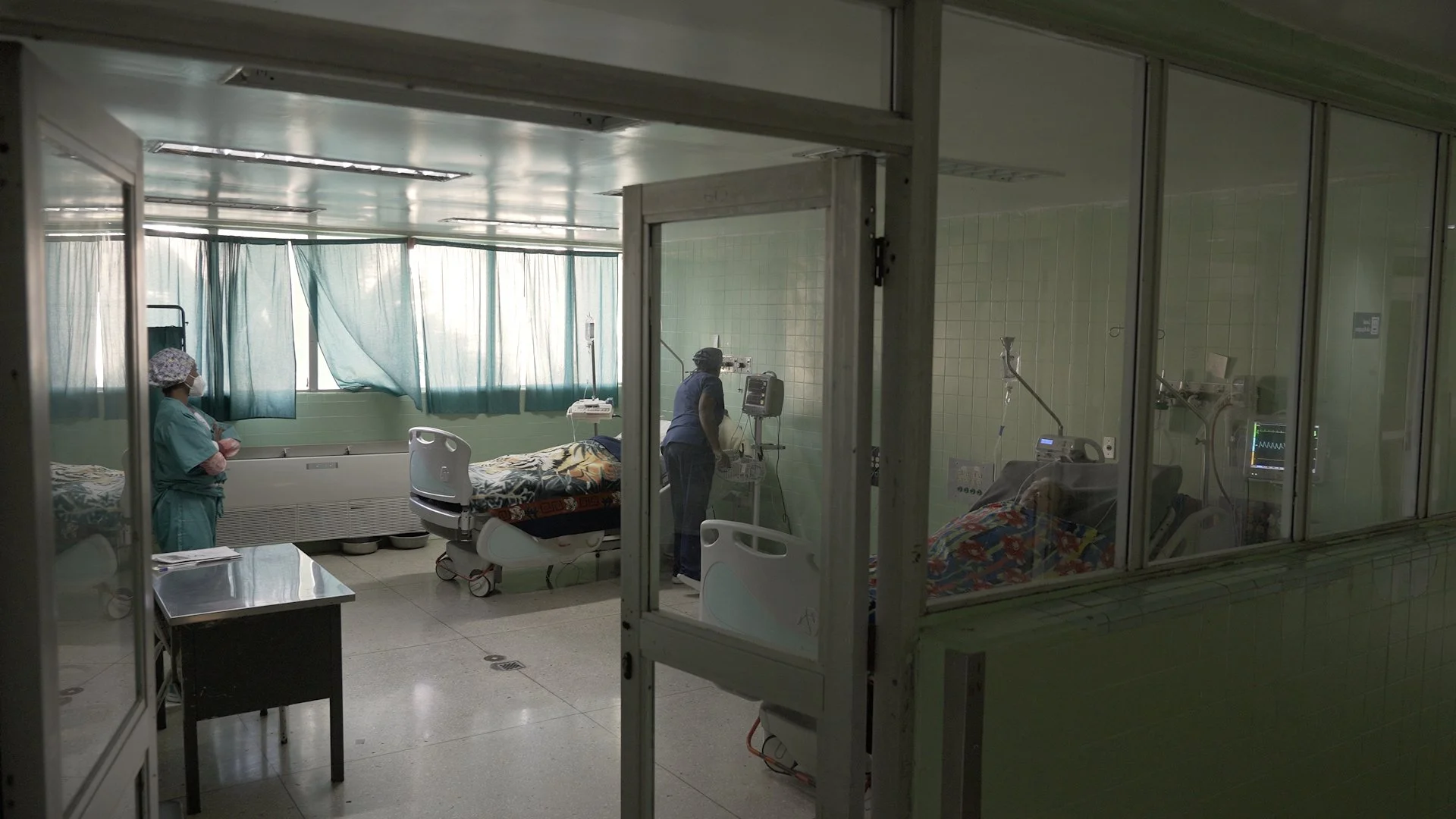
She came to bring food, medicines, especially to the children’s hospitals, where the maximum pressure sanctions are killing babies.
Medea explains to Liz Oliva Fernández what the investigations really are, how she was saved by Cuban doctors, why Hasan Piker's reach made him a target and why this won’t stop the solidarity towards Cuba. “
It's a form of intimidation, to try to get people who travel to Cuba to be afraid that the U.S. government's going to go after them,” she said.
Related Stories
Share this Report
-
“Those people who think that we are that easily intimidated, they don’t know Code Pink, but they will find out how determined we are,” declared Medea Benjamin, co-founder of Code Pink.
“Fox News recently reported on an investigation by the U.S. Treasury Department, specifically the Office of Foreign Assets Control, or OFAC,” explained journalist Liz Oliva. “According to the report, you and others were cited in connection with your participation in the Nuestra América Humanitarian Convoy to Cuba in March 2026. Is it true?”
“It’s not a subpoena,” Benjamin responded. “It’s a letter asking for information about the trip, what we did, what flight we took, what aid we brought with us, what we did while we were there, those kinds of things.”
“What are they trying to get?” Oliva asked.
“It’s a form of intimidation,” Benjamin stated. “They want people who travel to Cuba to be afraid that the government is going to go after them.”
“It’s not a tactic that works with Code Pink because we’re certainly not afraid of our government. We’re afraid of our government’s policies, like the policy toward Cuba and what it’s doing to the Cuban people. That’s what we’re afraid of.”
“Have you or Code Pink violated any U.S. laws during your visits to Cuba?” the journalist continued.
“We didn’t violate the law,” Benjamin answered. “In fact, we followed the letter of the law.”
“We did not want to stay in a fancy hotel in Havana. We would much prefer to stay in a very simple hotel, but we weren’t allowed to by the U.S. government. They have a list of hundreds of hotels we’re not allowed to stay in and only a handful that are foreign-owned. In this case, we stayed in a Spanish-owned hotel.”
“We also traveled under the category of aid to the Cuban people, and we brought humanitarian aid. We did not go to the beach. We were not tourists. We spent our time in educational activities, learning about the situation in Cuba.”
“So we certainly are in compliance with the law,” Benjamin emphasized. “That’s why we feel this request for information is really just a form of intimidation.”
“We didn’t try to hide that we were going,” she continued. “On the contrary, we encouraged people to speak out and use their social media.”
“It’s interesting that Hasan Piker, who has millions of viewers, many of them young people, has helped educate audiences for the first time about what the U.S. government is doing in Cuba.”
“I think the kind of social media reach we had on that trip irritated many members of Congress and pushed them to pressure the Treasury Department to do something.”
“How does Code Pink plan to respond to this?” Oliva asked.
“We will be responding legally,” Benjamin explained. “We don’t want to confront the government over a trip. We want to confront the government over its policies.”
“That’s why we’re organizing demonstrations to stop the U.S. from invading Cuba. And that’s why we’re doing so much educational work to make the American people aware of how sadistic U.S. policy is toward Cubans.”
“Why are you dedicating so much time and energy to educating people in the United States about Cuba?” Oliva asked. “Why do you care about Cuba?”
“Personally, I first encountered Cuba when I lived in a poor village in Africa and I was dying from malaria,” Benjamin recalled. “It was Cuban doctors who saved me.”
“Then I saw Cuban doctors all over Africa saving lives. I thought, what kind of country sends its doctors overseas, living very simply and dedicating themselves to helping people who never had access to a doctor?”
“Then I visited Cuba and spent a lot of time there. As somebody who studied nutrition and worked with poor, malnourished children around the world, I was amazed by the level of care Cubans put into their own children as well as children in other countries.”
“When the U.S., under Donald Trump, severely increased pressure on the Cuban economy, I saw how many of those gains deteriorated.”
“I’ve seen how difficult it is for doctors to care for babies in incubators. I’ve seen the infant mortality rate more than double in the last few years. And it is so painful to think that my government’s policies are literally killing babies in Cuba.”
“I think the American people need to know that, because if they knew, they would be appalled at what we are doing.”
“Medea, how can you be sure that the crisis Cuba is going through right now is caused by your government and not by the Cuban government?” Oliva asked.
“The Cuban government has faced enormous difficulties since 1960, when the blockade was first imposed,” Benjamin answered. “Things improved during the Obama years.”
“I remember visiting Cuba during that period and seeing conditions improve for ordinary Cubans. But when Trump came in and erased those gains, you could visibly see the damage done to the Cuban economy and the Cuban people.”
“COVID certainly hurt Cuba, especially because tourism collapsed. But this last period under Trump, with the oil blockade, has devastated daily life for people in Cuba. It has become a catastrophe.”
“I want people outside Cuba to imagine what their lives would be like without electricity, without fuel, without public transportation.”
“The lack of fuel is creating hunger. It is preventing doctors from performing surgeries. Thousands and thousands of people are unable to receive operations.”
“This is a sadistic policy,” Benjamin declared. “And for Marco Rubio to say with a straight face that it’s the Cuban government and that there is no blockade is ludicrous.”
“It’s mean, inhumane, and a big fat lie.”
“The first time I visited Cuba was in 1979,” Benjamin continued. “I’ve been going ever since.”
“Particularly during these difficult years, I’ve been traveling there every few months, bringing food and medicine, especially for children’s hospitals.”
“The children have nothing to do with politics. They’re not socialists, they’re not capitalists, they’re just children, and we need to help them.”
“The situation between the United States and Cuba is becoming tense, and you can feel it,” Oliva noted. “Are you afraid right now?”
“I’m not afraid at all,” Benjamin replied. “I think the government is wasting its time going after me.”
“What I’m afraid of is what the government is doing, and might do, in Cuba. I pray every day that the United States is not going to invade.”
“I want to change my government’s policy so desperately that I’m dedicating much of my time to this issue because I never imagined we would be in a situation where the U.S. would want to invade Cuba.”
“It’s ironic that Marco Rubio says he wants private enterprise to thrive in Cuba while the very policies he supports are destroying the private businesses that exist there.”
“We know Cuba is open to foreign investment, and there are many ways this could become a win-win relationship, like we began to see during the Obama years.”
“It’s tragic that we have this horrible and tense situation instead of normal relations with Cuba.”
“If Cuba’s guilt is simply that it is a communist country, then why do we trade billions of dollars with China? Why do we trade billions with Vietnam?”
“If the concern is human rights and free expression, then why do we maintain such strong relations with countries like Saudi Arabia or Egypt?”
“Even here in my own country, we’ve seen what ICE has been doing in our communities, destroying lives, tearing families apart, and putting people in detention centers.”
“It’s not fair to the Cuban people, who should be the ones deciding their own future.”
“What do you think the goal of the United States is when it comes to Cuba?” Oliva asked.
“I think there may be different goals,” Benjamin reflected. “Perhaps Donald Trump wants a Trump resort in Cuba, beachfront property, his name in lights, and control over tourism.”
“But then there’s Marco Rubio and a small group of members of Congress who want regime change. They want an absolute change of government.”
“Some people ask why the U.S. doesn’t do something similar to Venezuela, removing the president while keeping the rest of the system intact. But Cuba is not like that. That would never be enough for Marco Rubio and his allies like Mario Díaz-Balart, María Elvira Salazar, and Carlos Giménez.”
“They want absolute change.”
“Do you think Cuban-American politicians like Marco Rubio, now Secretary of State, and others like Mario Díaz-Balart truly represent the will of Cuban Americans or Americans in general?” Oliva asked.
“When it comes to Cuban Americans, they represent only one sector,” Benjamin responded. “There are millions of Cuban Americans, especially younger people, who do not want military intervention and do not support policies that hurt ordinary Cubans.”
“And when it comes to the broader American public, the overwhelming majority oppose a U.S. invasion of Cuba”, Medea said.
“As you know, Liz, the overwhelming majority of the world is also against U.S. policy toward Cuba. We see it every year at the United Nations, where almost every country except the United States and Israel votes against the blockade.”
“This policy really represents only a small minority of Cuban Americans whose political voice is far louder than the size of the group they actually represent.”
“What is your assessment of the media coverage surrounding your humanitarian work and activism related to Cuba?” Oliva asked.
“First of all, we didn’t even receive the letter until after we heard about it on Fox News,” Benjamin said. “The story was sensationalized and very misleading.”
“But in one sense, it gave us an opportunity to speak. We’ve done many media interviews since then.”
“People who knew nothing about our efforts are now learning about them and asking how they can join and help.”
“So in that sense, it actually benefited our efforts to educate people about U.S. policy toward Cuba.”
“We will keep working, keep pushing, and we will not be intimidated.”
“And those people who think we are easily intimidated don’t know Code Pink. They don’t know the other groups committed to supporting the Cuban people. But they will find out how determined we are.”
Support Independent Journalism from Cuba